Nitration of benzyl chloride
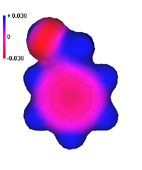
1) Electron density
The ClCH2 group slightly decreases the electron density of the ring. The chlorine atom withdraws charge from the CH2 that is unable to inject electrons into the ring. The electron density at the ring is almost the same as compared to benzene's.
2) Relative reaction rate
Chloromethylbenzene reacts very slightly slower (0.7) than benzene. The benzenonium ion is very slightly less stable when the ClCH2 group is attached to it.
3) Substitution direction
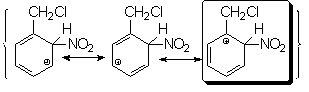
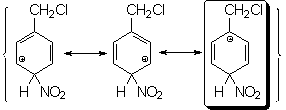
Substitution takes place mainly at the ortho and para positions, meaning that the corresponding benzenonium ions are less unstable than the meta one. The resonance forms give us once again the answer.
Ortho substitution
Para substitution
Meta substitution
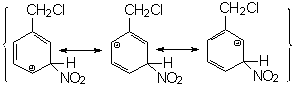
The meta case is the only one where the positive charge cannot be located at the carbon bearing the ClCH2 group and thus cannot be further delocalized and stabilized.
The energy diagram is as follows:
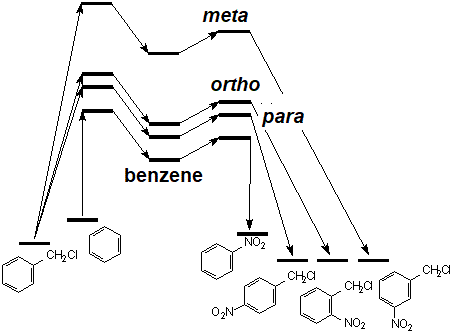
Benzyl chloride reacts somewhat more slowly than benzene (krel = 0.7), so its reaction pathways must be higher. The meta pathway should be the highest because that isomer is the minor component. The ortho:para ratio is 32:53 in this case, equal to 1:3.3 after removing the statistical factor of the two ortho positions. The para pathway should be slightly higher in energy than that of benzene, but lower than the ortho and meta ones.