Adolf von Baeyer (1835-1917)
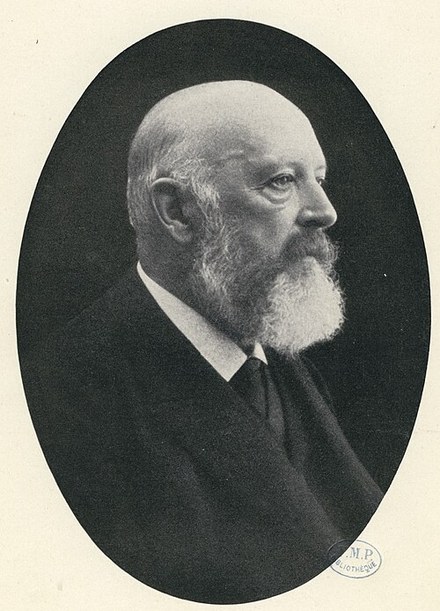
German chemist, born in Berlin. He studied physics and mathematics in Berlin and chemistry in Heidelberg, first under Robert Bunsen and then under August Kekulé, and obtained his doctorate in Berlin in 1858. He was professor in Berlin and Strasbourg and, from 1875, Justus von Liebig’s successor at the University of Munich, where he trained a generation of organic chemists.
He discovered barbituric acid (1864), the parent compound of the barbiturates, and the phthalein dyes, such as phenolphthalein and fluorescein (1871). He achieved the synthesis of indigo, established the structure of indole and proposed the strain theory of small rings. He received the Nobel Prize in Chemistry in 1905. He died in Starnberg in 1917.