The Boots synthesis of ibuprofen
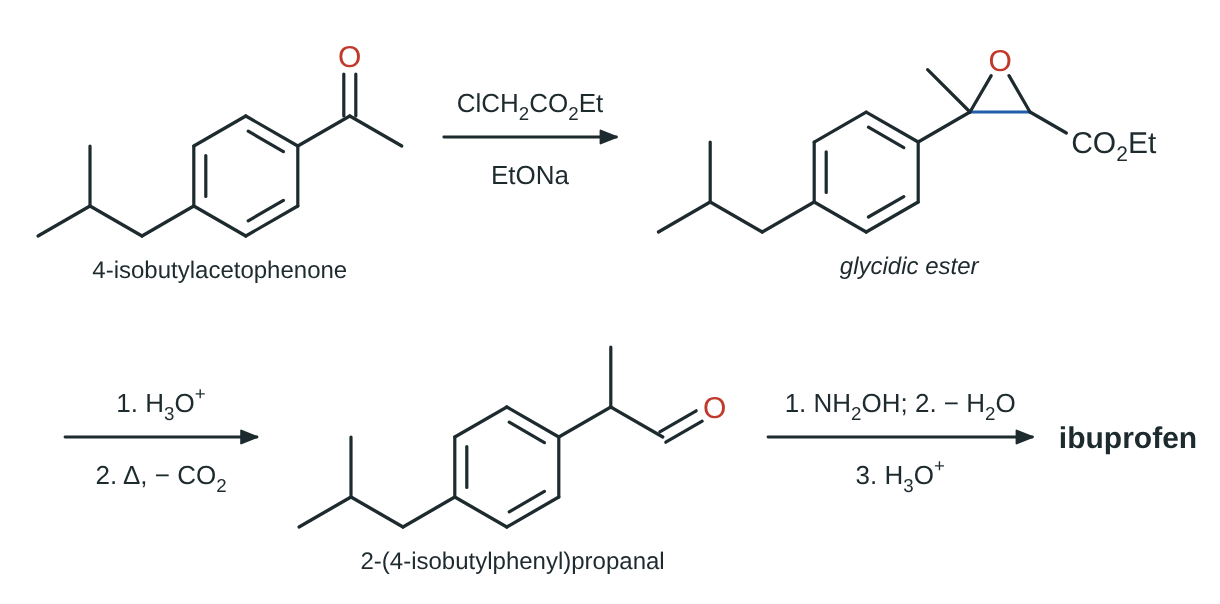
The first industrial synthesis of ibuprofen, developed by the Boots company in the 1960s, begins with a Darzens condensation. 4-Isobutylacetophenone, obtained by Friedel–Crafts acylation of isobutylbenzene, reacts with ethyl chloroacetate and sodium ethoxide to give the glycidic ester.
Hydrolysis and decarboxylation, with opening of the epoxide, give 2-(4-isobutylphenyl)propanal, with one more carbon than the starting ketone. The aldehyde is converted into the oxime, which is dehydrated to the nitrile, and hydrolysis of the nitrile gives the acid: ibuprofen. Later, the BHC process reduced it to three catalytic steps, a classic example of green chemistry.