
Catalytic Hydrogenation
Alkynes can accept two moles of hydrogen and be converted into alkanes. The logical halfway in this hydrogenation is the alkene. However, the alkyne-to-alkene transformation is more exothermic than the alkene-to-alkane one and under standard catalytic hydrogenation conditions it is very difficult to stop at the alkene, unless a poisoned catalyst is used.

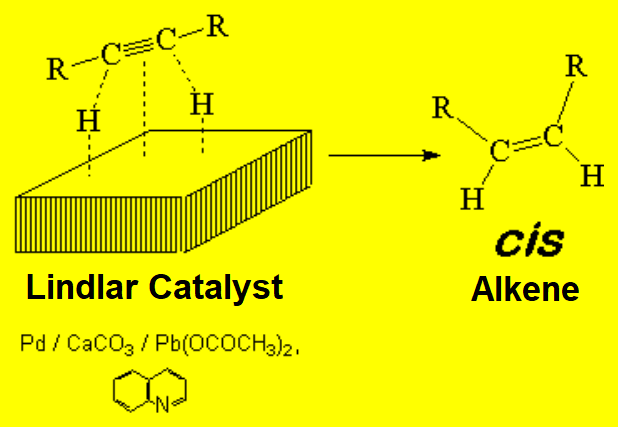
In order to reduce alkynes to alkenes efficiently with metal catalysts, the activity of the latter must be reduced. A good example is the Lindlar catalyst, in which the Pd surface is poisoned with different substances to make it less active. As usual, the splitting of the hydrogen molecule on the catalyst surface makes the two hydrogen atoms add to the same face of the alkyne, giving the cis alkene.