NMR spectrometers and techniques
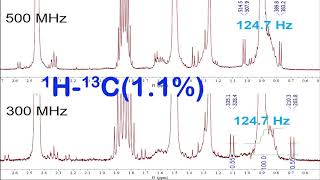
An NMR spectrometer is, above all, a magnet: the stronger and more homogeneous the field, the better separated and the more sensitive the signals. From the permanent magnets of the 1960s came electromagnets and, from the 1980s, superconducting magnets, which today reach 28 T. In parallel, new permanent magnets have brought benchtop instruments that fit in any laboratory.
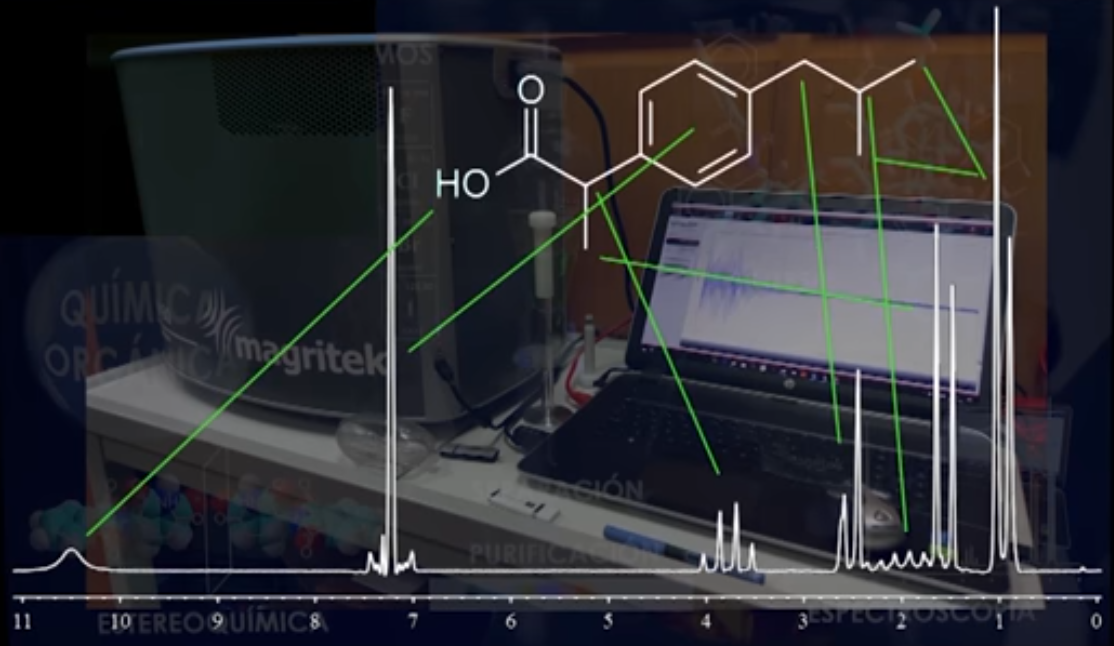
NMR is the most powerful technique for determining the structure of organic compounds. The most important nuclei of their molecules, hydrogen and carbon, give individual signals when they are in a strong magnetic field and are irradiated with radio frequency, and those signals, properly deciphered, reveal the structure of the compound that emits them.
The history of the magnets
NMR instruments have always been expensive and bulky because of the magnet.
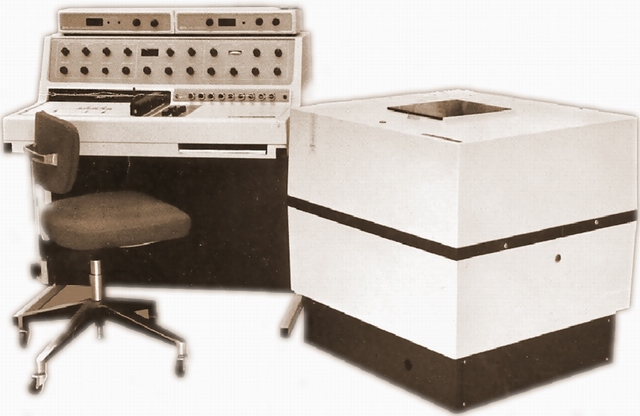
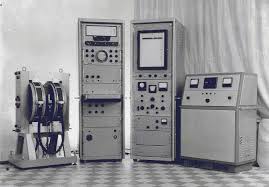
- Permanent magnets (1960s and 1970s). They were large and very heavy, and it was hard to go beyond 1.4 T (60 MHz for 1H) with them. Their stability was limited and the field around the sample was not as homogeneous as needed.
- Electromagnets. They reached about 2.3 T (100 MHz) and more homogeneous fields, at the cost of even greater size and weight and an outrageous consumption of electricity and cooling water.
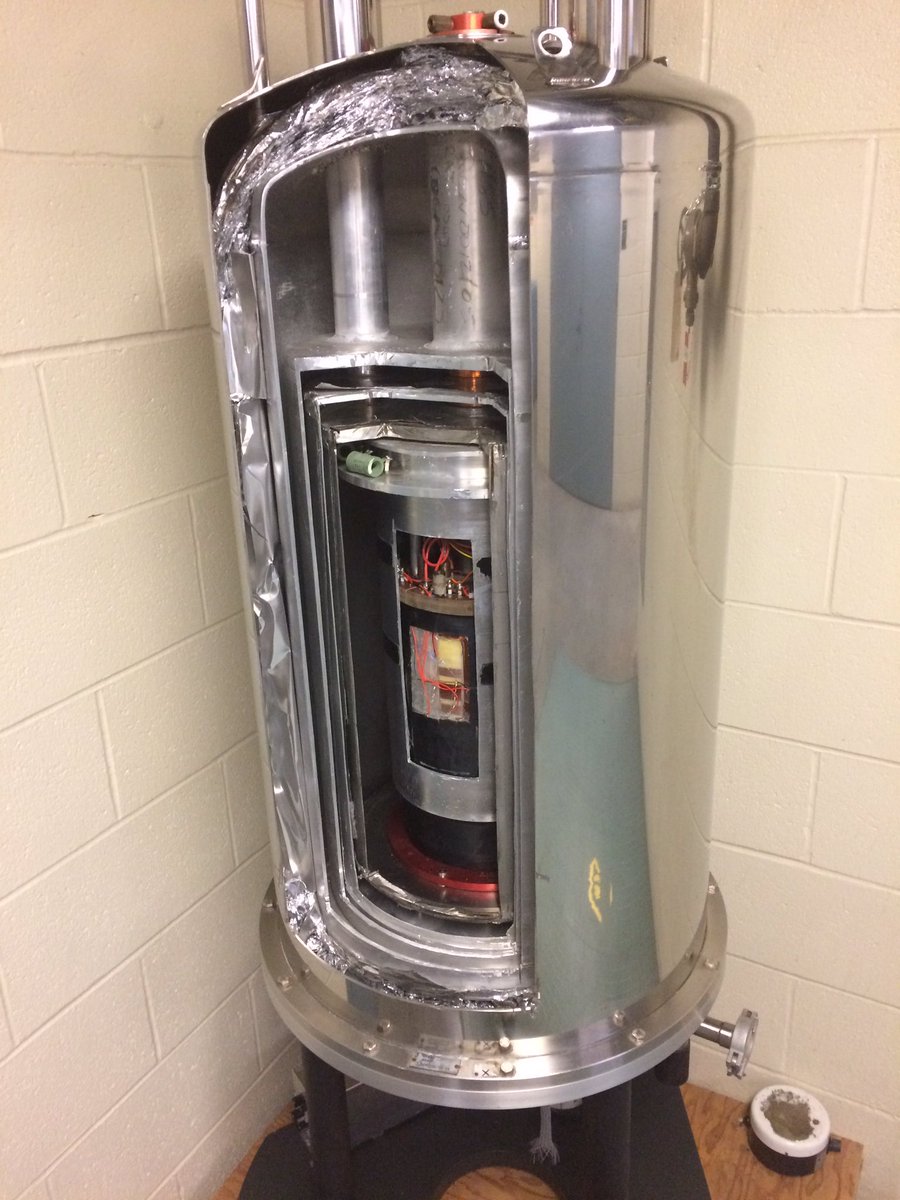
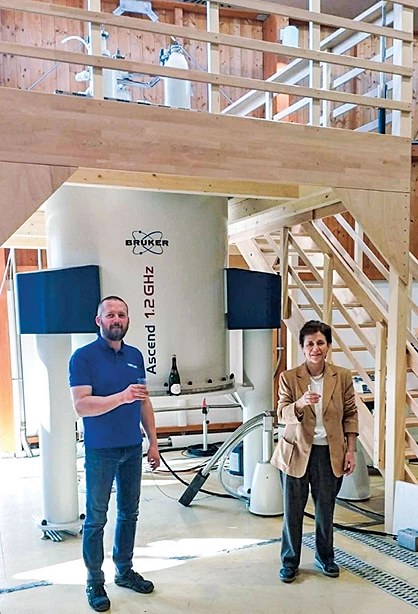
- Superconducting magnets (from the 1970s, and routine from the 1980s). Much smaller, they give fields of 7 to 28 T (from 300 MHz to 1.2 GHz) and almost perfect homogeneity. Their arrival coincided with that of computers able to store a lot of data and to perform the Fourier transform quickly.
The price of superconductivity
For the magnet coil to be superconducting, that is, for the current to flow with no resistance at all, it has to be immersed in liquid helium, at −269 °C (4 K). The magnet housing is really a large vacuum flask, with a helium reservoir surrounded by another of liquid nitrogen (−196 °C), which have to be refilled periodically. Once charged, the magnet keeps its field for years without consuming electricity.
Helium is expensive and scarce, and maintaining a superconducting instrument requires specialized staff. That is why they are usually found in the central facilities of universities and companies. The smallest superconducting instrument usually bought, 400 MHz (9.4 T), costs several hundred thousand euros, and its maintenance easily exceeds €10,000 a year, not counting a technician's salary. Those of 900 MHz to 1.2 GHz cost millions.
Back to permanent magnets: “personal NMR”
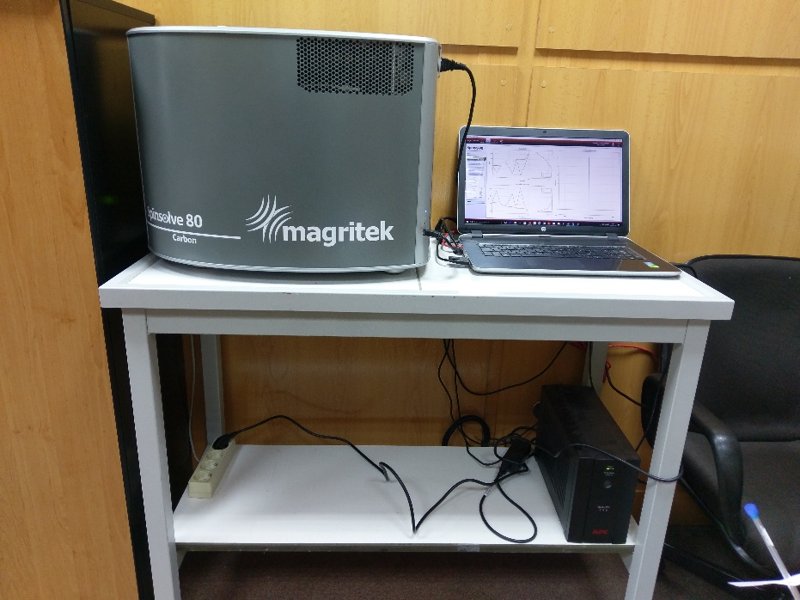
The miniaturization of electronics and rare-earth alloys, which give very strong permanent magnets at room temperature, have brought a new generation of instruments over the last fifteen years: benchtop spectrometers, from 40 to 100 MHz (1 to 2.4 T).
- They are small: the magnet weighs a few tens of kilos.
- Their stability and homogeneity were unthinkable just twenty years ago.
- They need no liquid helium or nitrogen, use less electricity than a household fridge and require no specialized staff.
- Their price, a few tens of thousands of euros, is similar to that of a sophisticated chromatograph.
They can be installed in any laboratory, so NMR is becoming “personal NMR”, as happened with computers in the 1980s. They can run the same experiments as superconducting instruments, including two-dimensional ones, although with less sensitivity and with the signals closer together. Many of the spectra in this course were recorded on one of them; their advantages and drawbacks will be pointed out throughout the course.
The sample
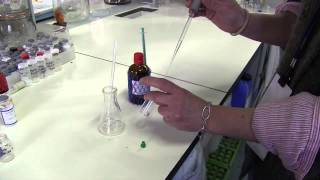
For a 1H spectrum a few milligrams of sample dissolved in 0.5-0.6 mL of a deuterated solvent, such as CDCl3, in a 5 mm glass tube are enough. The deuterated solvent prevents its own hydrogens from hiding the signals of the sample, and the instrument uses the deuterium signal to keep the field stable. For 13C, more sample or more time is needed. NMR does not destroy the sample, which can be recovered.
Pros and cons of NMR
Let us start with the drawbacks:
- Mastering NMR requires long, specialized training. This course is a first step.
- Superconducting instruments are very expensive, and so is their maintenance.
- It is an insensitive technique compared with others, such as mass spectrometry: it needs milligrams, not nanograms.
And the advantages? They can be summed up in one sentence: NMR is the definitive tool for determining even the most complicated structures in organic chemistry. There is no other technique like it.
What spectra can be recorded
The same spectrometer can record many kinds of spectra, which are studied in the following topics:
- Hydrogen (1H) spectra, with their coupling.
- Carbon (13C) spectra.
- Spectra of other nuclei: 19F, 31P, 15N…
- Homonuclear (1H-1H) and heteronuclear (1H-13C) two-dimensional spectra.
- Special techniques and the application of all of this to complex molecules.
To finish, a video: how a spectrum is recorded
This video shows, in a real laboratory, how an NMR sample is prepared and how its spectrum is recorded.
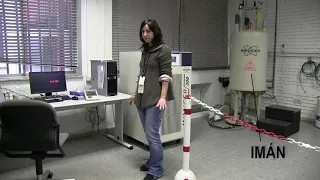 ▶ Watch the video on YouTube (in Spanish)