Chirality and Optical Activity
Your hands are 'isomeric' because they have the same finger pattern but are object and non-superimposable mirror image. They look very much alike but are definitely different. This property is called CHIRALITY. Therefore, a molecule is CHIRAL if and only if its mirror image is non-superimposable, however we rotate it about any axis or twist any of its single bonds. An object and its non-superimposable mirror image are ENANTIOMERS or ENANTIOISOMERS. They are CHIRAL, different molecules that differ in one physical property: the OPTICAL ROTATION of polarized light.
 ▶ Watch the video on YouTube
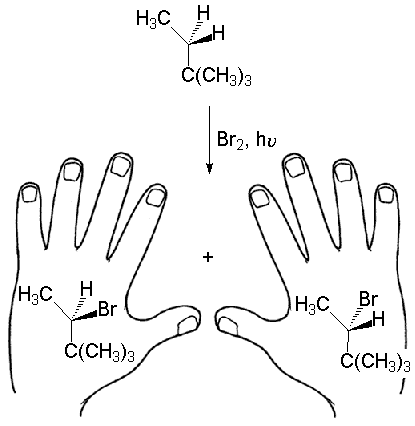
Does this reaction give a single product, or two different compounds? Can you superimpose the two bromo derivatives? The answer to the last question is NO. Consequently, the reaction gives a mixture of two different compounds, object and non-superimposable mirror image, i.e. two ENANTIOMERS.
Why are two ENANTIOMERS formed? Because the two hydrogens that can react are equivalent to each other and are equally likely to be attacked by bromine.
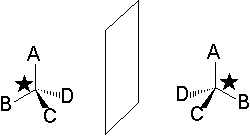
An important class of CHIRAL MOLECULES are those with one or more carbons bearing four different substituents. These special carbons are called STEREOGENIC CENTRES or STEREOCENTRES.
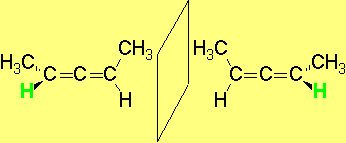
However, to complicate the picture of STEREOISOMERISM even further, there are molecules that are CHIRAL without having any STEREOCENTRE. The most relevant examples are ALLENES, BIPHENYLS and BINAPHTHYLS, among many others.
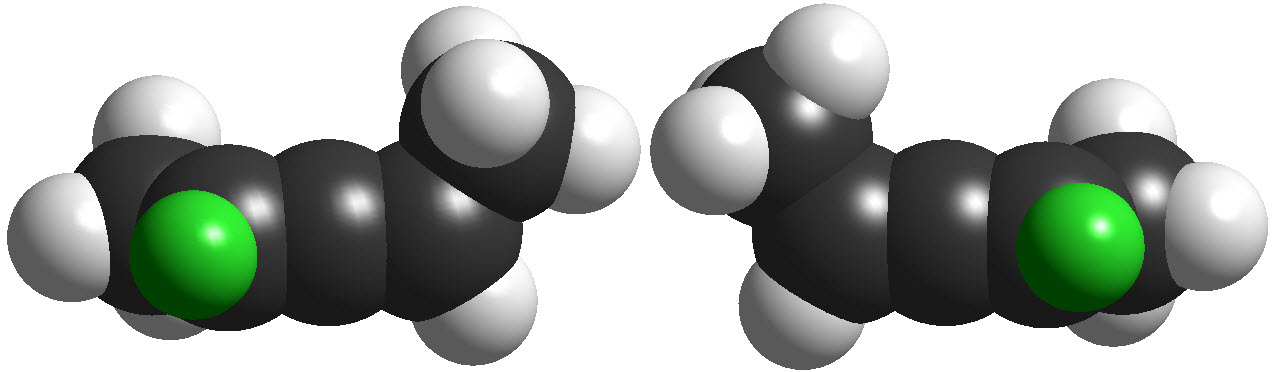
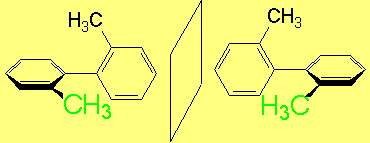
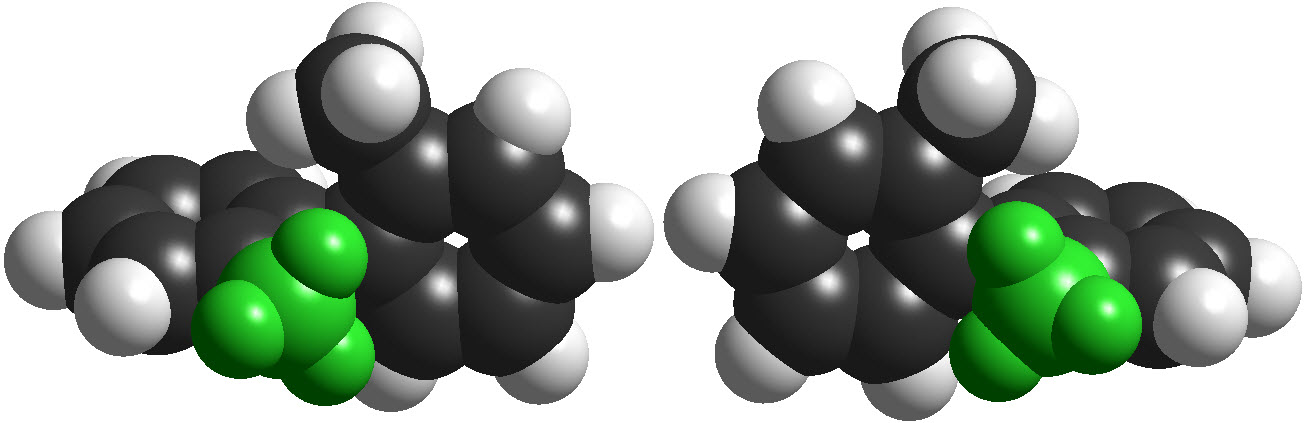
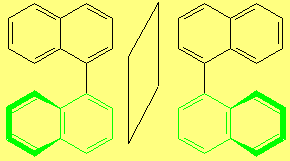
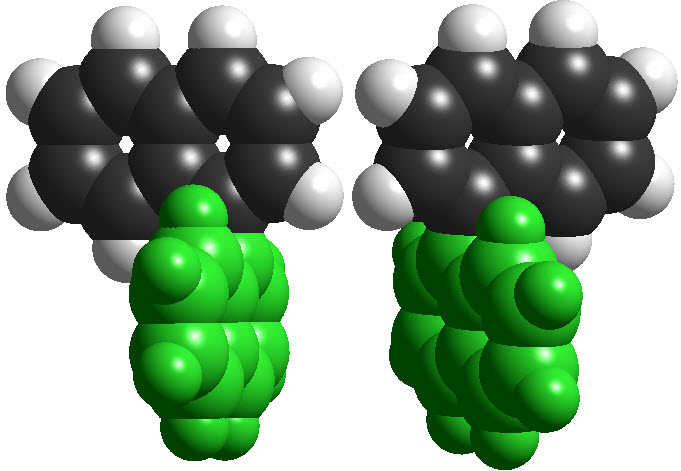
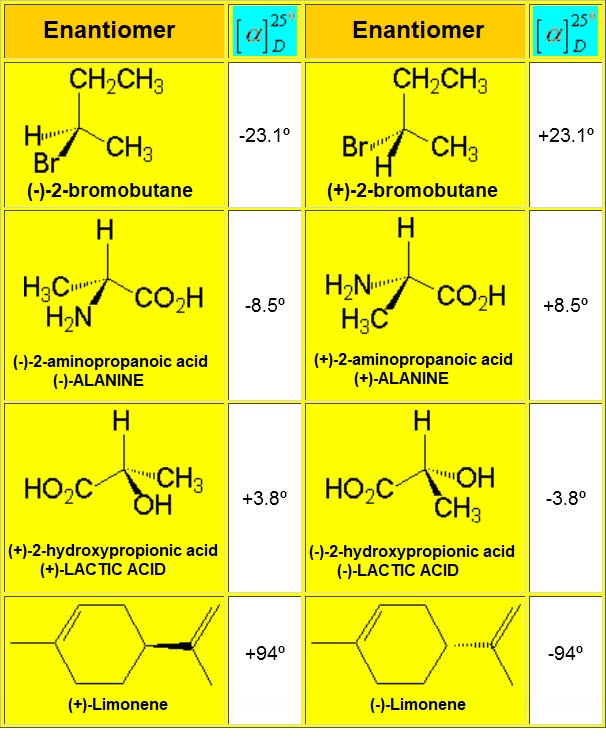
ENANTIOMERS have exactly the same physical and chemical properties, with the important exception of their response to polarized light (OPTICAL ACTIVITY). That is why they are also called OPTICAL ISOMERS.
Specific optical rotation, measured with a POLARIMETER, is a physical property characteristic of the structure of each ENANTIOMER, its concentration and the solvent used in the measurement. When the specific rotation of each ENANTIOMER is known, measuring the specific rotation indicates the ENANTIOMERIC PURITY of the product.
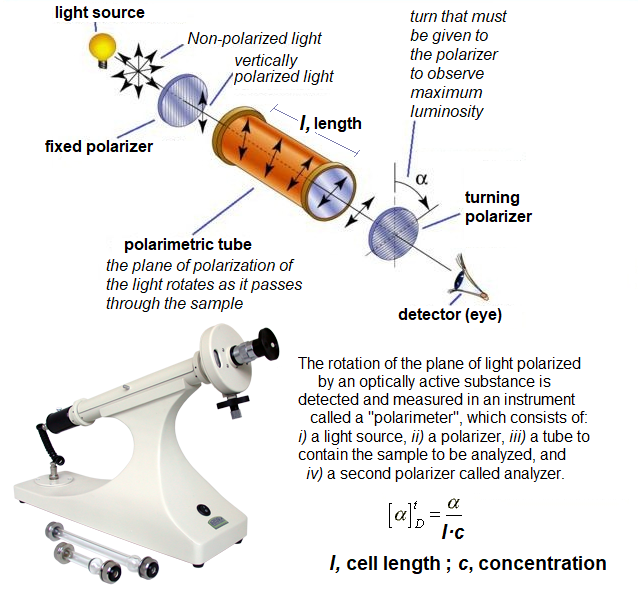
 ▶ Watch the video on YouTube
NON-CHIRAL compounds and 1:1 mixtures of enantiomers (RACEMIC MIXTURES or RACEMATES) are optically INACTIVE and therefore show zero optical rotation.