Cyclohexane
The cyclohexane ring is very special because it lacks tension. This is very likely the reason why cyclohexane is so abundant in natural substances.
 ▶ Watch the video on YouTube
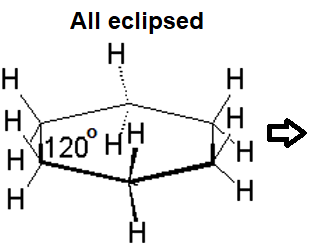
If cyclohexane were planar, its internal angles would be 120º, far from ideal for sp3 hybridization. Besides, all hydrogens would be eclipsed.
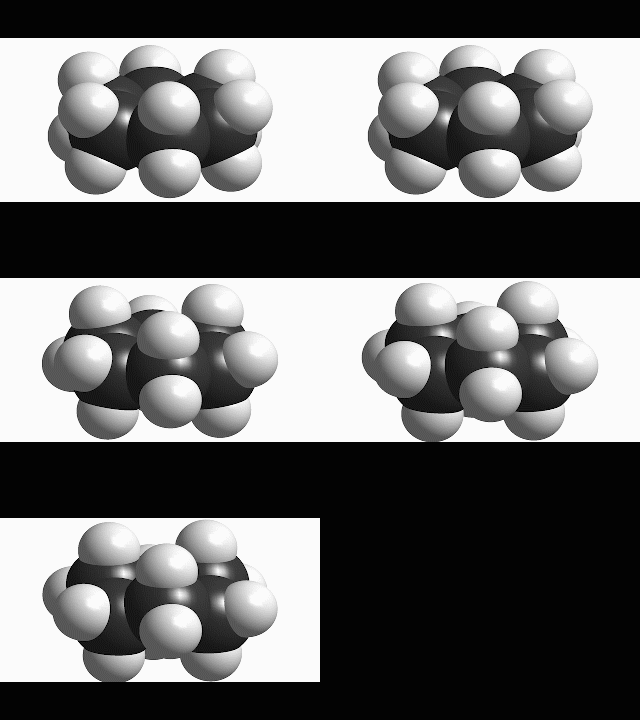
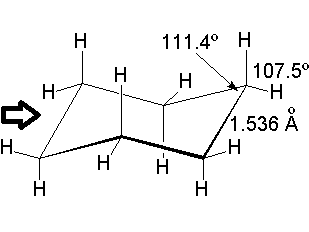
Cyclohexane is not planar but adopts a so-called chair conformation, where the internal angles are very close to 109.5º, the natural angle of sp3 hybridization. In addition, all hydrogens are perfectly staggered in the chair conformation.
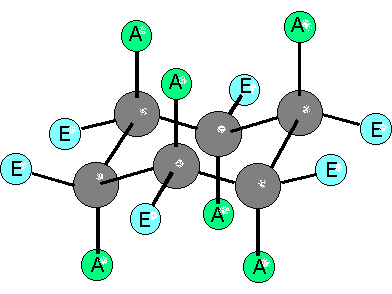
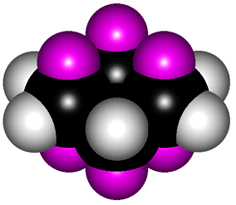
Can you tell apart two different hydrogen positions in the chair conformer of cyclohexane? Yes: equatorial (E) and axial (A).

Since cyclohexane is built from single C-C bonds, they can rotate. The combined rotation of several bonds gives rise to a conformational equilibrium in which the chair inverts. Note that chair inversion exchanges the positions: all equatorial hydrogens become axial and vice versa.
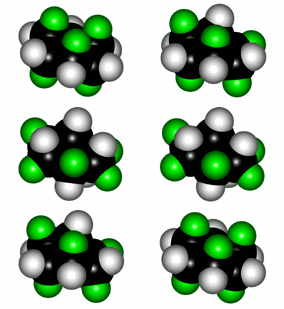
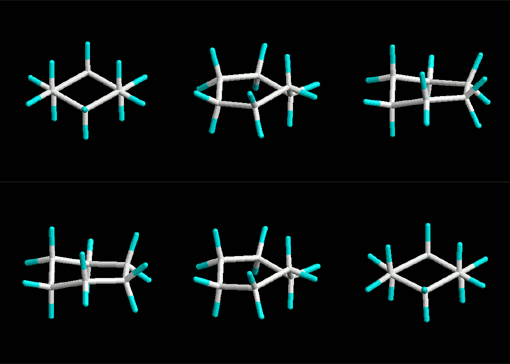
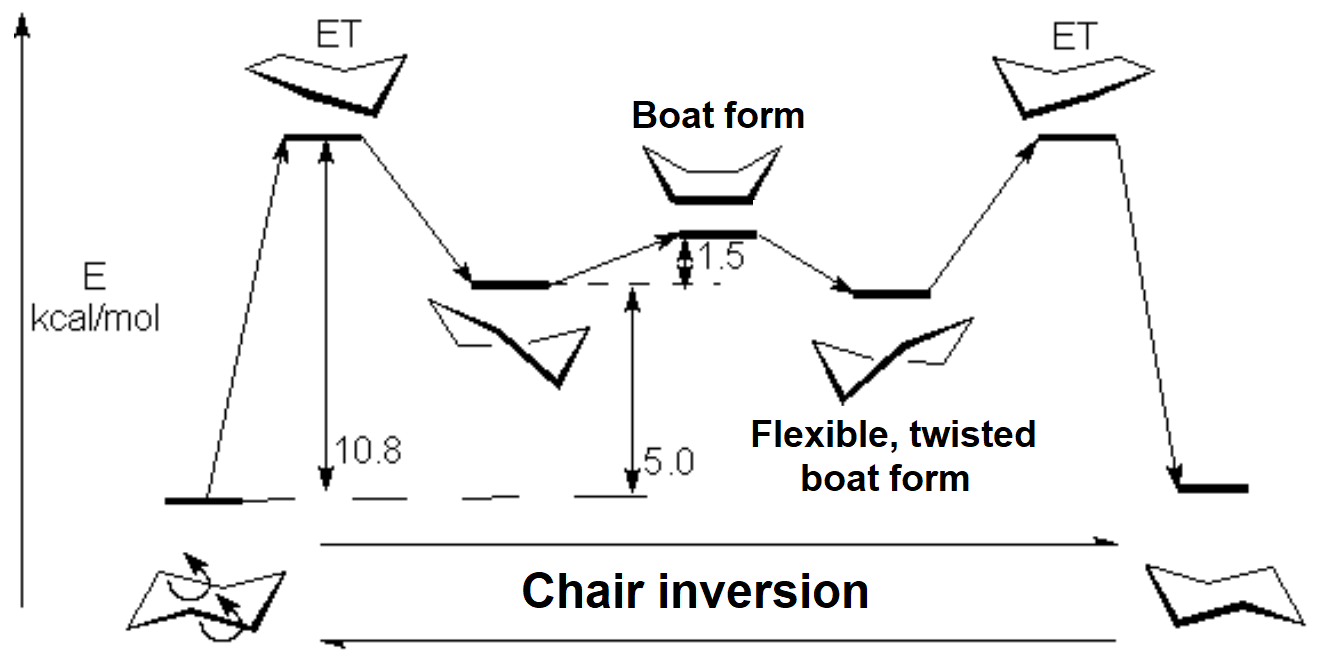
The mechanism of this combined bond torsion is quite complex and passes through 'boat' and 'twist-boat' conformers, with an overall inversion barrier of almost 11 kcal/mol, about four times that of ethane. Even so, the barrier is overcome several thousand times per second at room temperature.
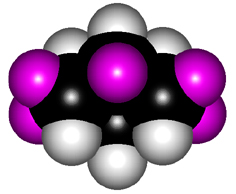
The two chairs in equilibrium of a cyclohexane ring can be represented in Newman projection.
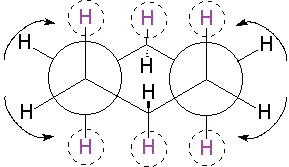
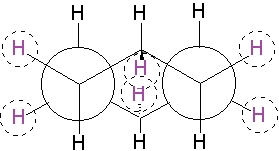
It is like drawing two 'Siamese' butane molecules in which the methyl groups have become shared CH2 groups. Look at how methylcyclohexane is drawn with its methyl group axial.