
Substituted Cyclohexanes
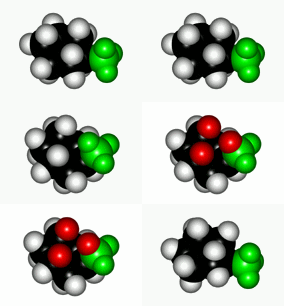
When a cyclohexane ring bears at least one substituent, the two chairs in equilibrium may no longer have the same energy. In general, the chair form with the bulkiest substituent(s) equatorial is the most stable one, as shown by the following experimental data.
 ▶ Watch the video on YouTube
If we set the chair-to-chair equilibrium as shown, a shift upwards, towards the equatorial conformer, implies a positive change in free energy, as displayed by the equations:
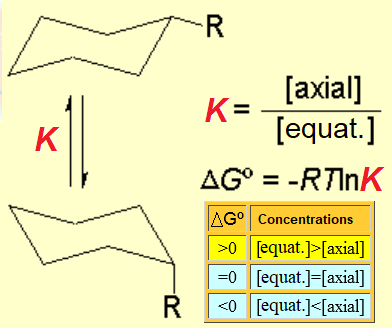
Can we understand why the methyl group has an experimental conformational energy of 1.8 kcal/mol? Recall that the gauche interaction between two methyl groups in butane had an energy cost of 0.9 kcal/mol.


That's why an axial methyl group is less stable than an equatorial one by twice 0.9, that is 1.8 kcal/mol. In general, substituents are less stable in the axial position because of their interaction with the CH2 groups at positions 3 and 5. Depending on the size of the substituent, this interaction will be more or less severe and its conformational energy larger or smaller.
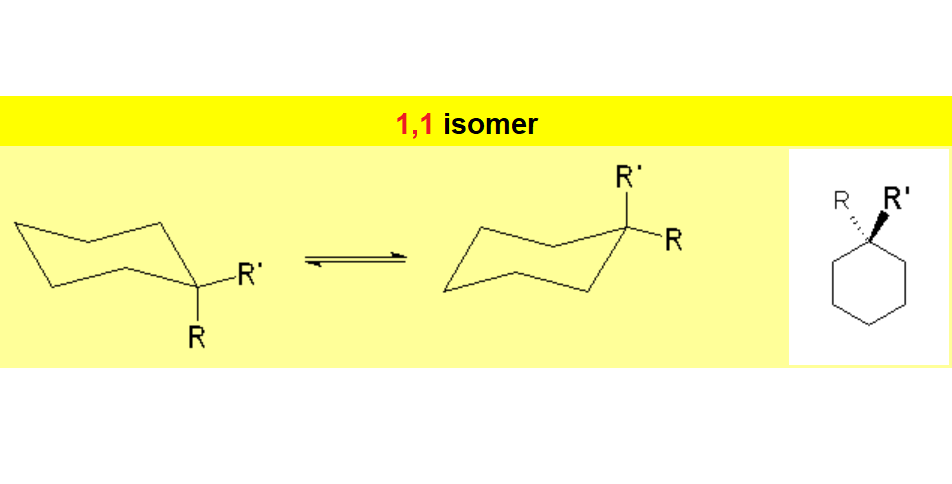
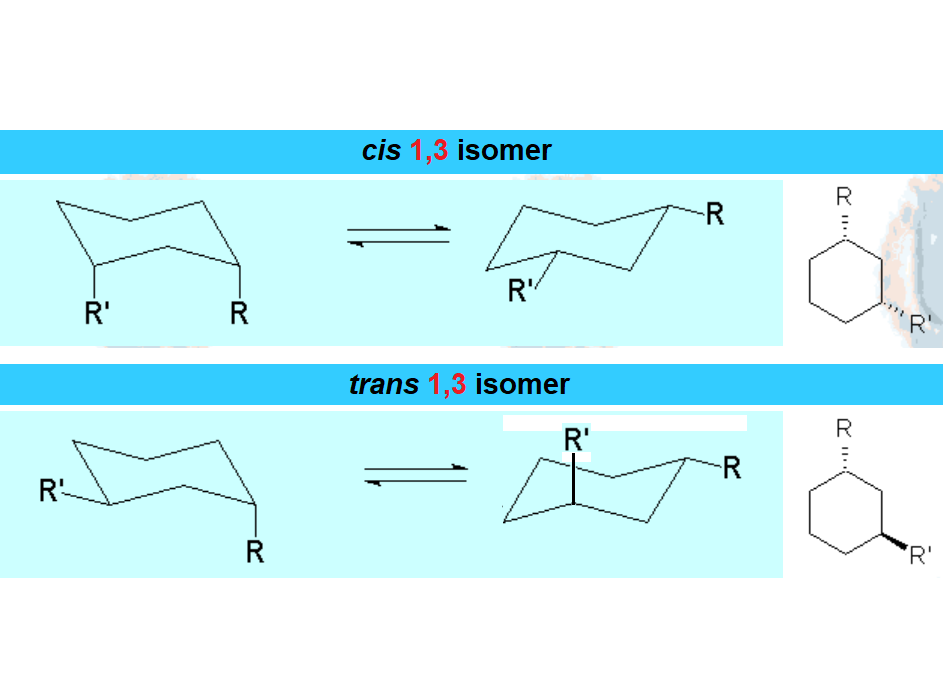
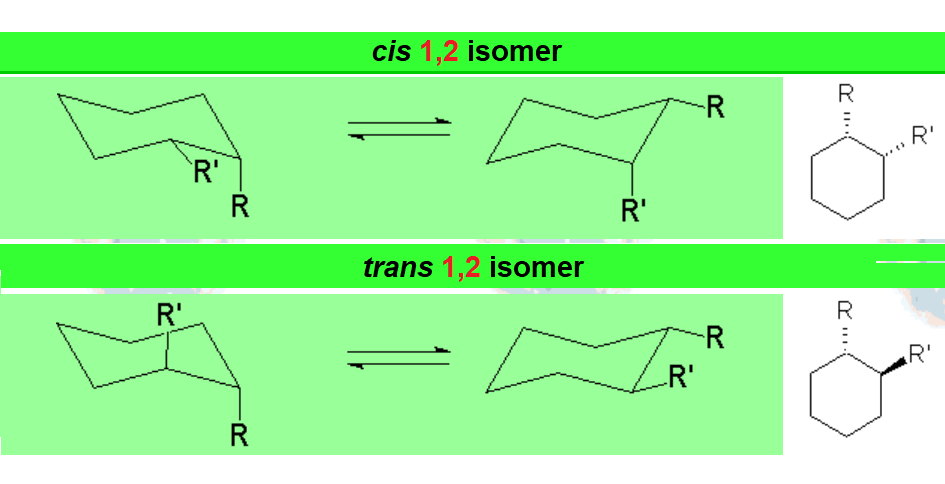
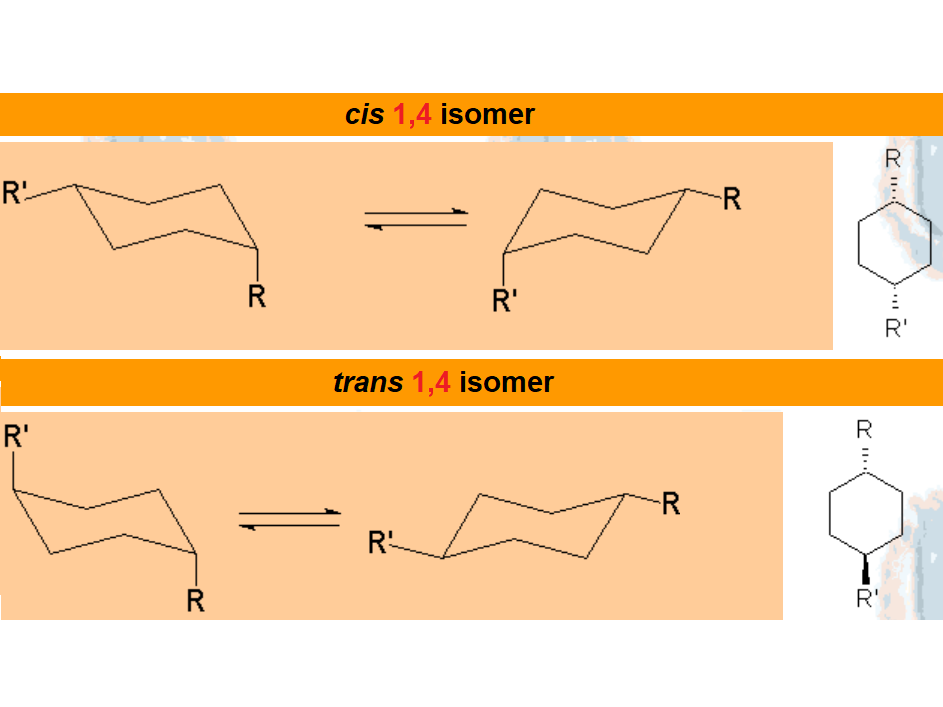
In disubstituted cyclohexanes, the conformational equilibrium will be shifted towards the chair with fewer axial substituents and/or the chair with the substituent of highest conformational energy in the equatorial position.