
Substitution of Alcohols
The OH group is one of the worst leaving groups. It must first be converted into something else in order to carry out its substitution.
For instance, the alcohol can be treated with a strong mineral acid to induce the protonation of the OH.
Once the OH is protonated, the leaving group turns into a water molecule:
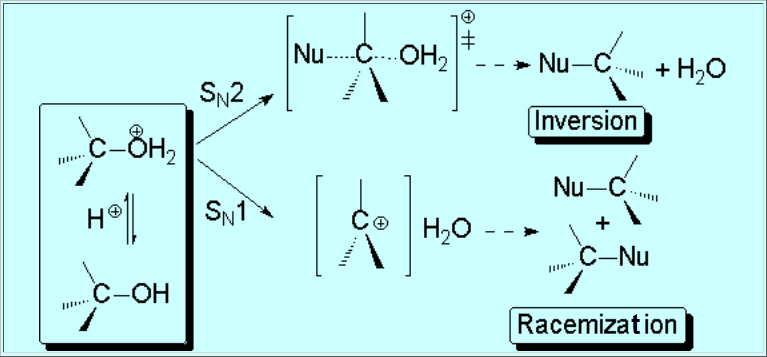
Protonation of the OH involves a severe increase in the C-O bond polarization, making the spontaneous heterolytic cleavage much easier, leading to a carbocation.
The formation of a carbocation always brings rearrangement problems, i.e. the formation of UNEXPECTED products. Look carefully!!!
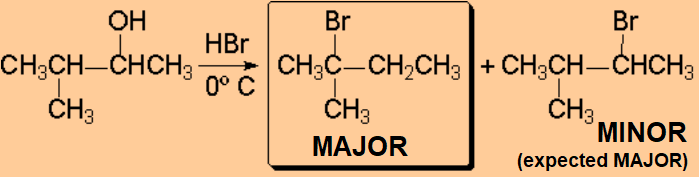
Don't you see that the Br group has ended up in an unexpected position?
The only way to explain that experimental result is to invoke a mechanism where a hydrogen rearrangement takes place, as follows:
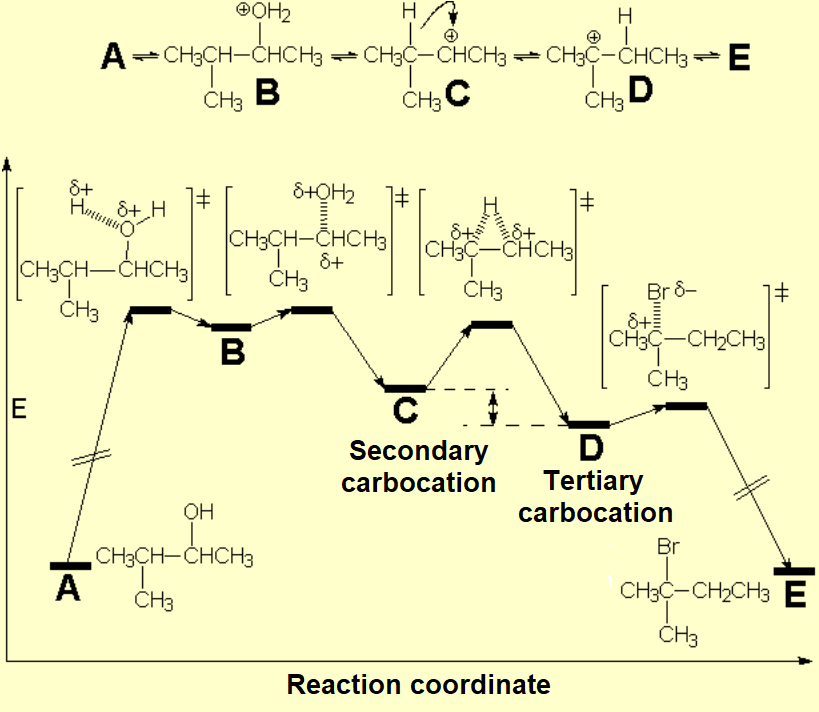
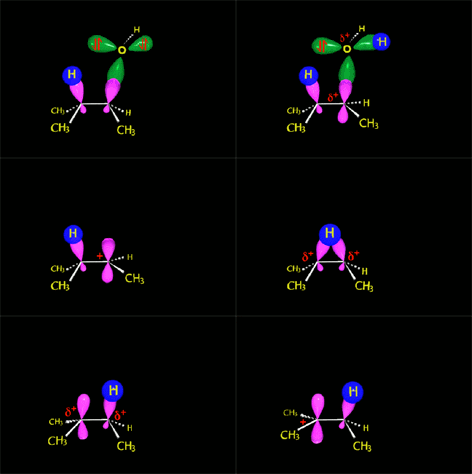
How come the rearrangement?
What is the driving force for the rearrangements?
Answer: the different stability of carbocations.
There's a way to avoid going through carbocations:
Derivatize the alcohol as an ester by means of an inorganic acid!!!
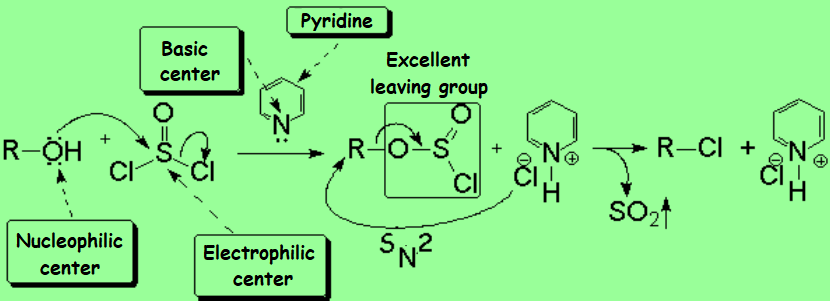
Thionyl chloride
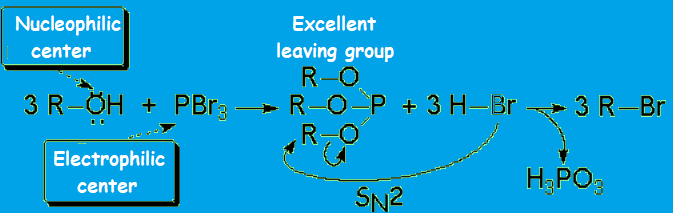
Phosphorus tribromide
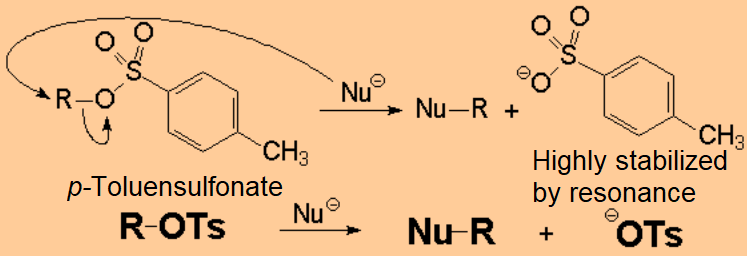
Sulfonic acids