
Reactivity
The reactivity of alcohols can be understood by examining the electron distribution within the C-OH group. It is similar to that of the haloalkanes, but the result is very different. Why?
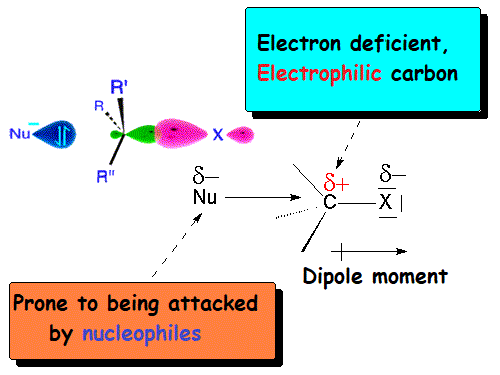
Alkyl Halide
The halogen atom is very electronegative and heavily polarizes the C-X bond.
Furthermore, the halide is a very good leaving group and can be expelled by a good nucleophile.
This does not happen with alcohols.
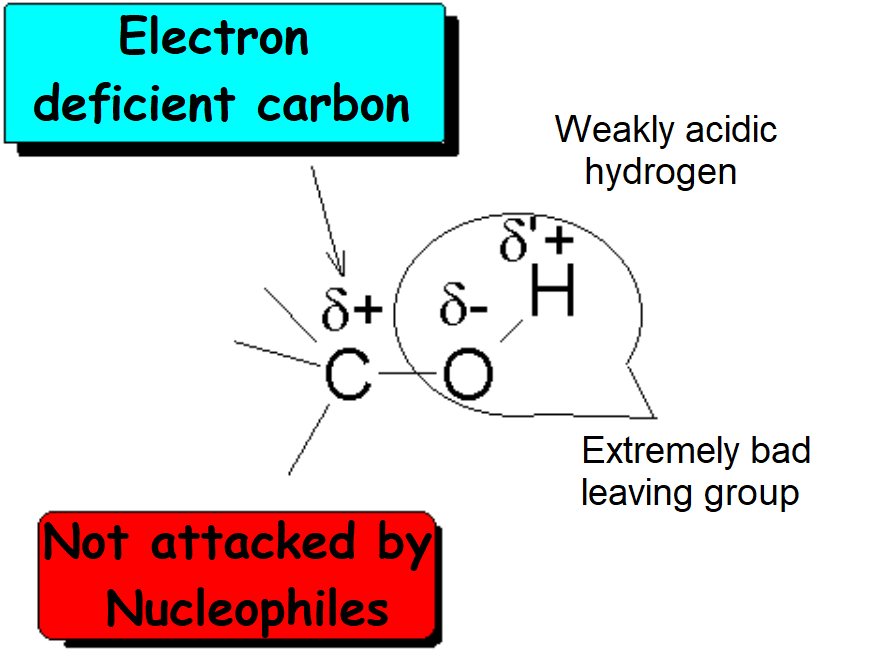
Alcohol
The electronegative oxygen polarizes the C-O bond in a similar way the halogen does.
But, unlike the halide, the hydroxide is an extremely bad leaving group.
Hence, alcohols don't directly react with nucleophiles.
In addition, alcohols display acidity, a property not shown by the corresponding halides. The weak acidity of the OH group makes alcohols give reactions not possible with the alkyl halides.


