γ-Alkylation of 1,3-dicarbonyl compounds
1,3-Diketones and keto aldehydes undergo the typical condensations at the methylene group between the two carbonyl groups. However, it was discovered in 1958 that if these compounds are treated with two equivalents of base, a disalt is formed that undergoes alkylation or other carbon–carbon condensations at the γ carbon rather than at the methylene group.
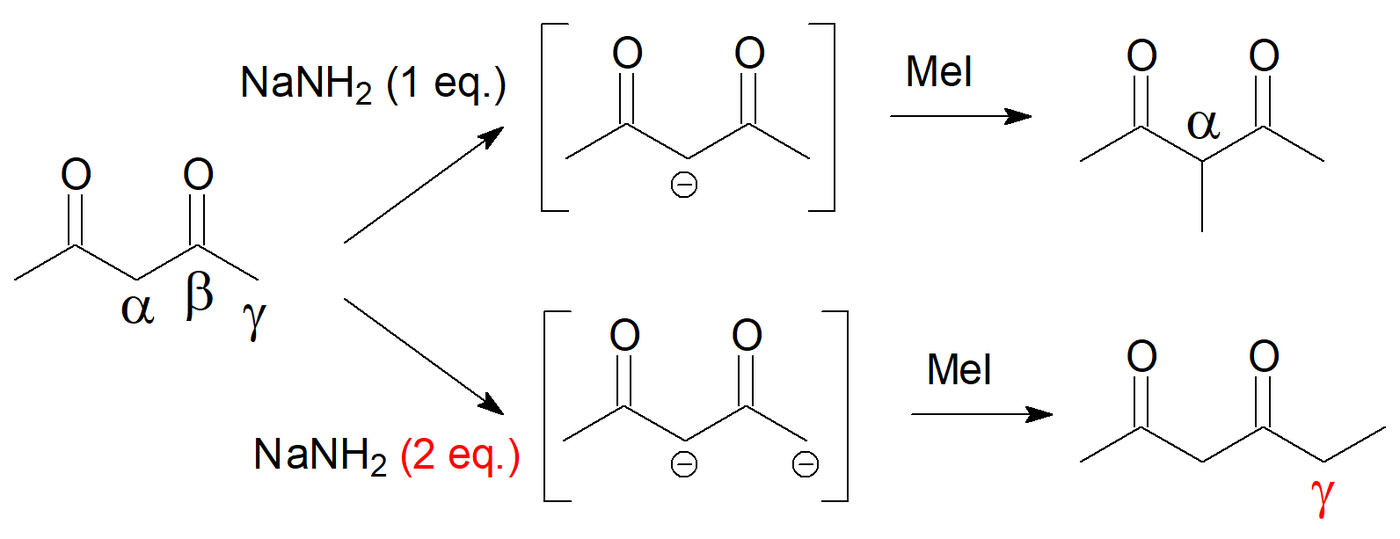
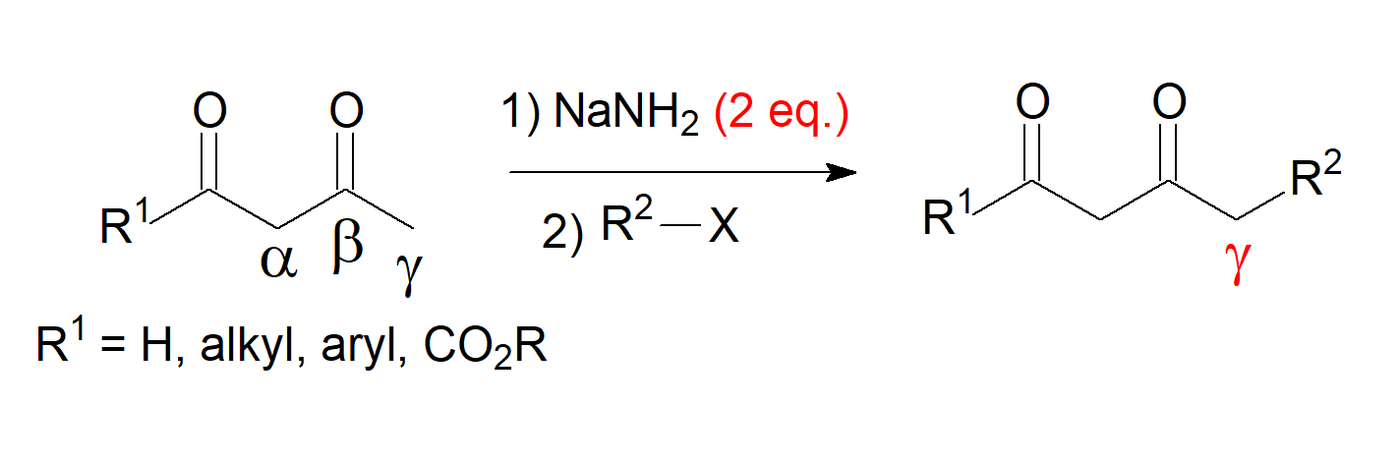
The discovery is due to Charles R. Hauser and Thomas M. Harris. In general, the reaction can be carried out with substituted 1,3-diketones, 1,3-dialdehydes or β-keto esters:
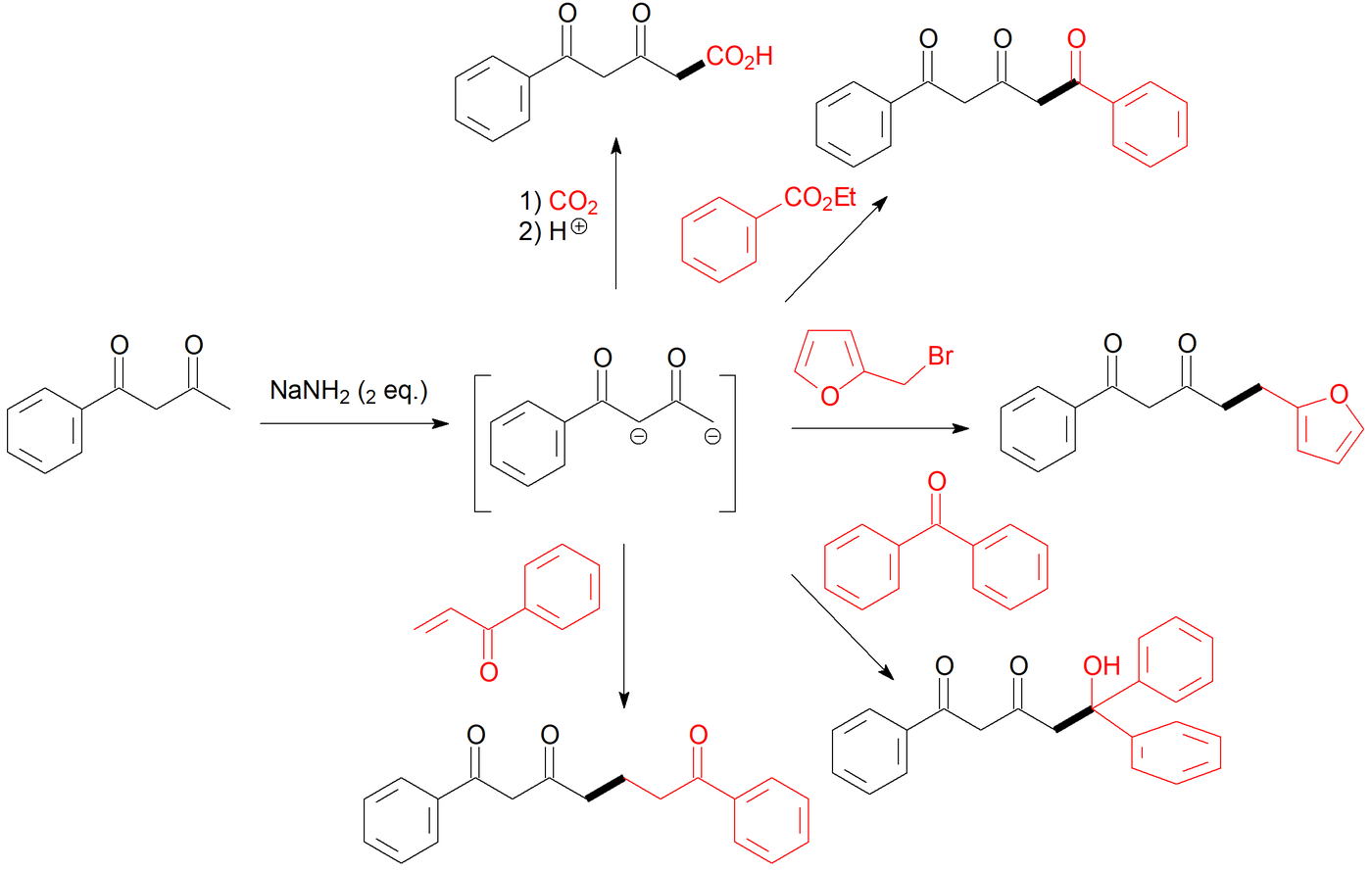
Some examples with benzoylacetone; an important limitation is that the electrophilic species reacting with the double carbanion must have no acidic hydrogens:
Structure of the dianion
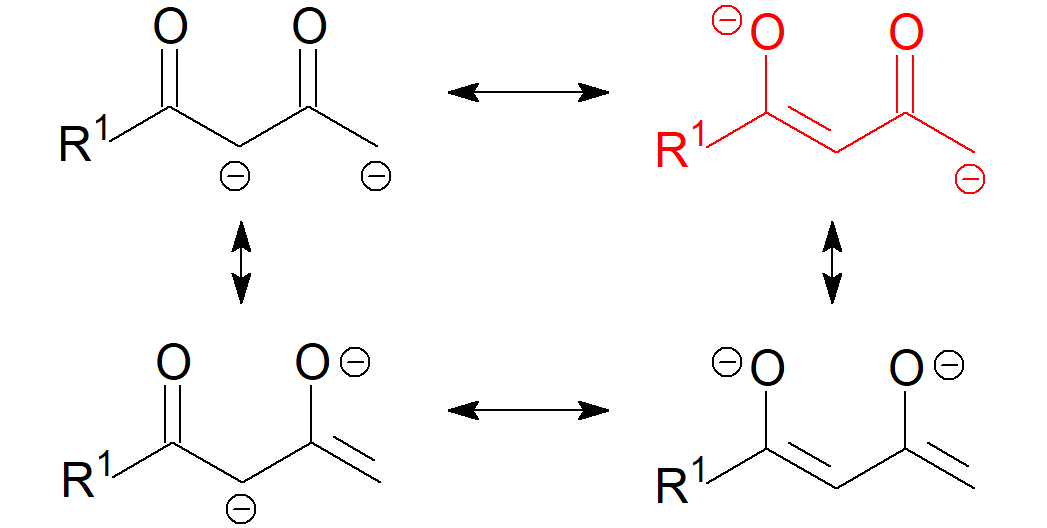
The dianion can be represented by four resonance forms, of which the one in red should be the main contributor, as it explains the reactivity at the γ carbon: the terminal carbanion is the least stabilized and therefore the most nucleophilic.
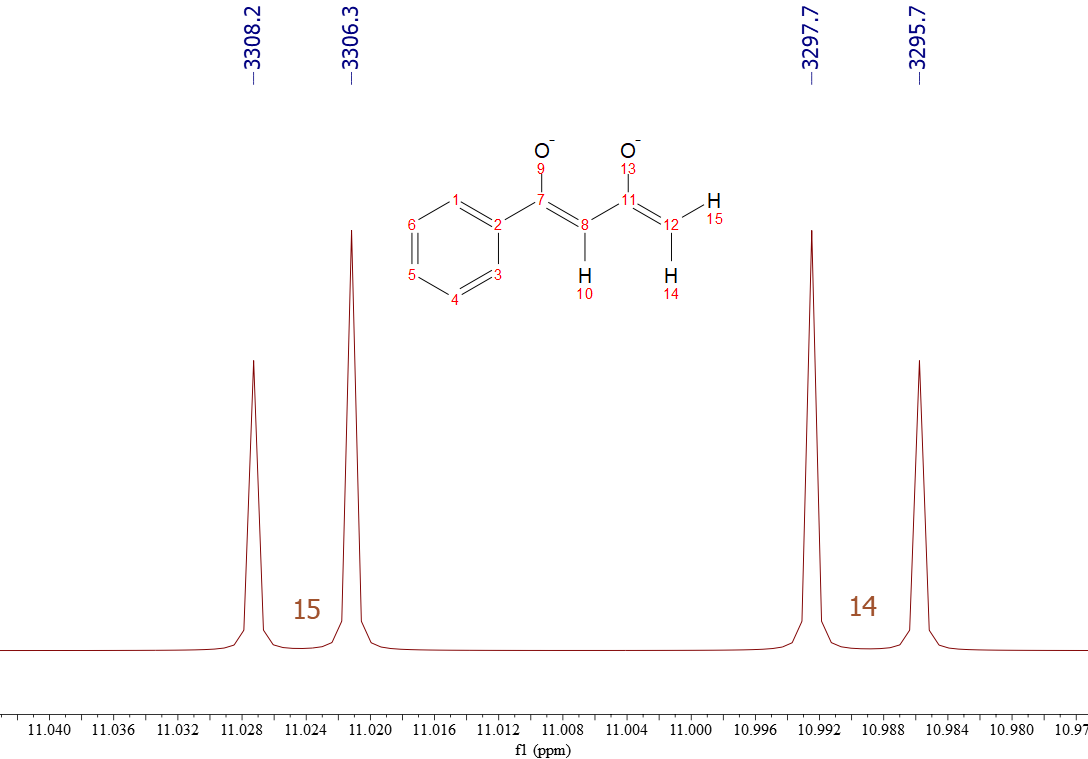
1H NMR supports a planar structure of the dianion, because it gives two different signals for the terminal hydrogens, and the small coupling constant between them is compatible with a terminal olefin-like structure.
Influence of the counterion
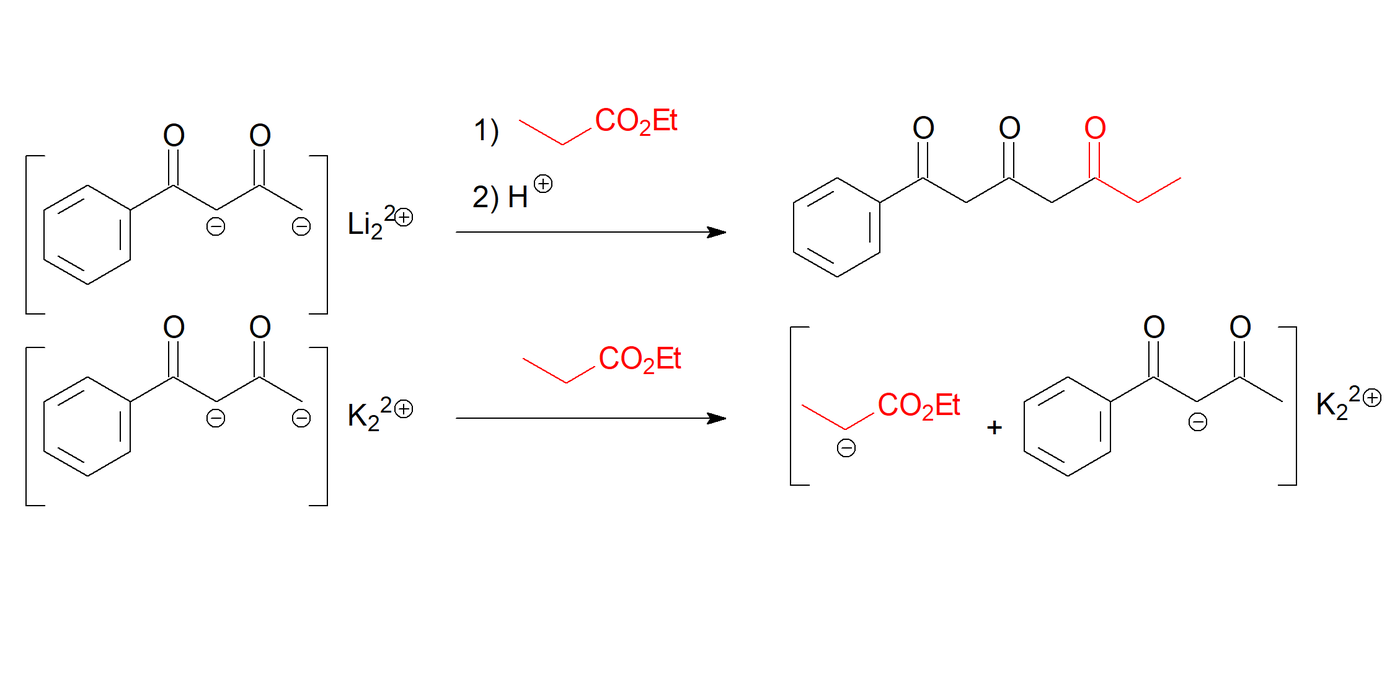
The counterion of the dianion is sometimes very important for the outcome of the reaction. Lithium usually allows the use of electrophiles bearing acidic hydrogens: carbon–carbon bond formation is sometimes faster than ionization of the ester. With potassium, by contrast, the dianion deprotonates the ester:
Regioselectivity
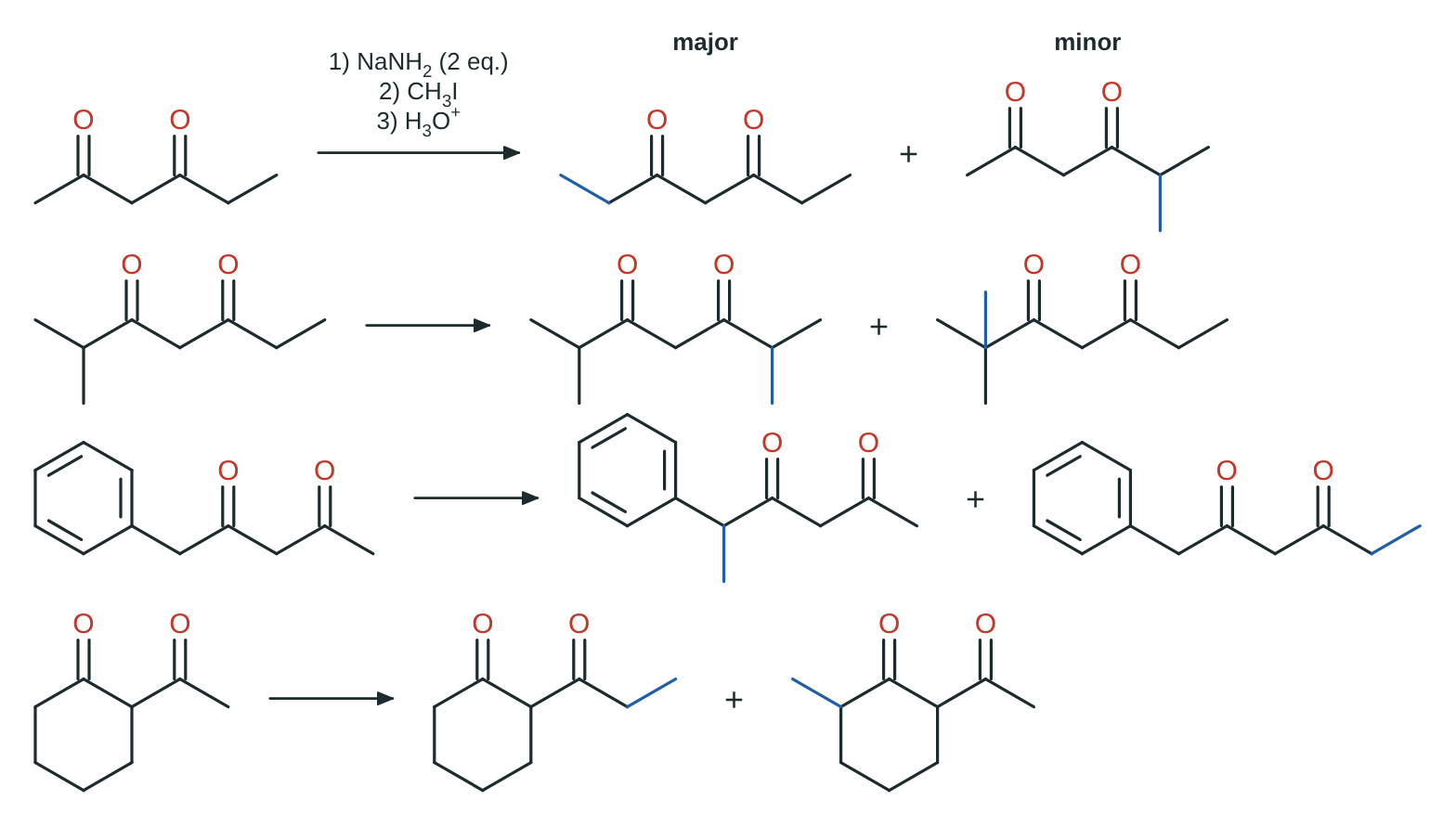
When the diketones are unsymmetrical, alkylation or acylation is usually quite regioselective: the second proton is removed from the more acidic γ carbon, and between two alkyl positions a methyl is preferred to a methylene and a methylene to a methine. Some examples:
1,3-Keto aldehydes
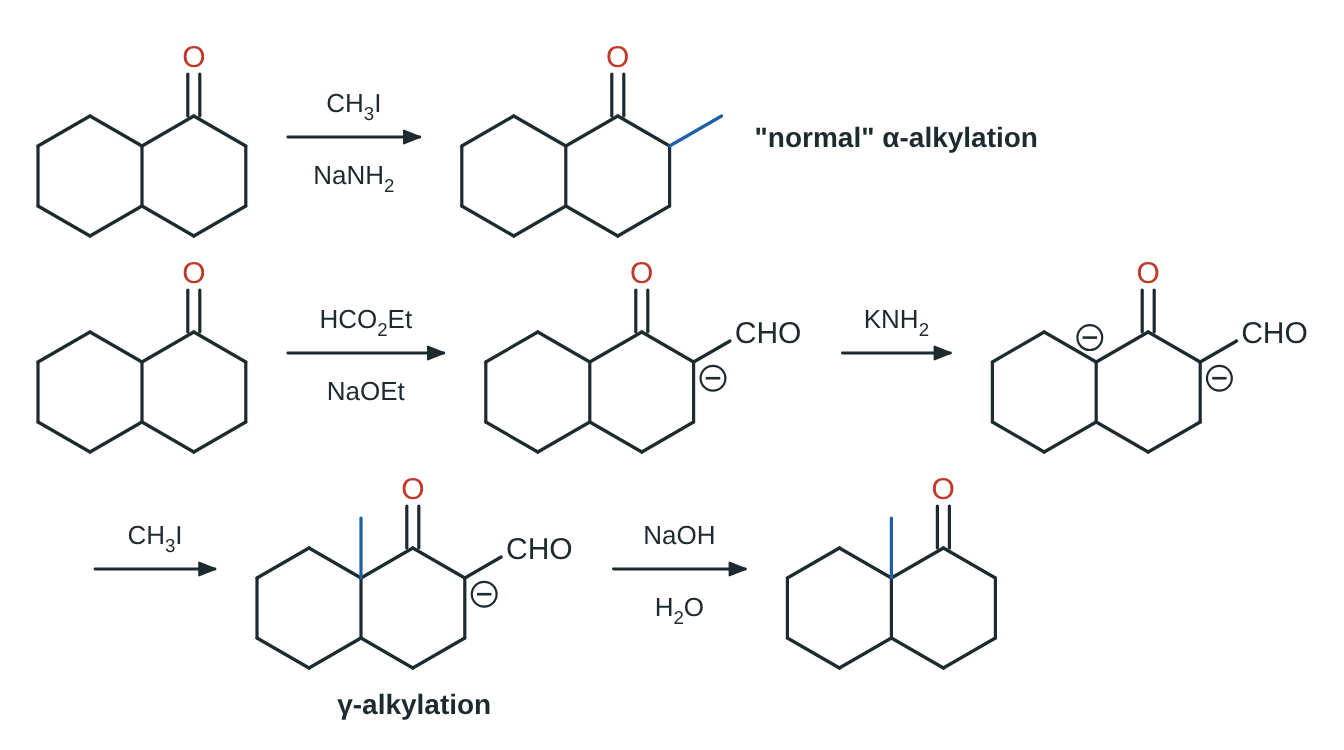
The alkylation of 1,3-keto aldehydes is interesting because the aldehyde can be removed in a final step of basic hydrolysis (a retro-Claisen). The formyl group thus acts as a temporary activating and protecting group that directs the alkylation of a ketone to the position that would not be alkylated directly. Look at the different outcome of these two procedures with 1-decalone: