
Enolates of α,β-unsaturated ketones
The strong conjugation in enolates formed from α,β-unsaturated ketones means that there are four possible sites for attack by electrophiles: the oxygen, the two α carbons and the γ carbon.
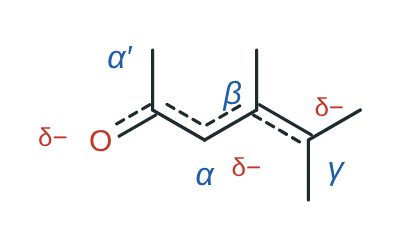
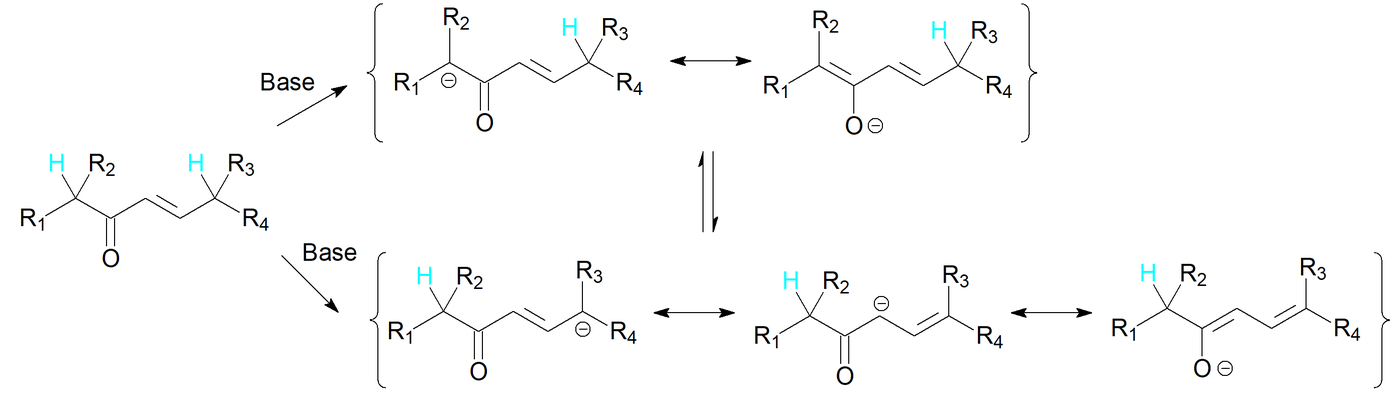
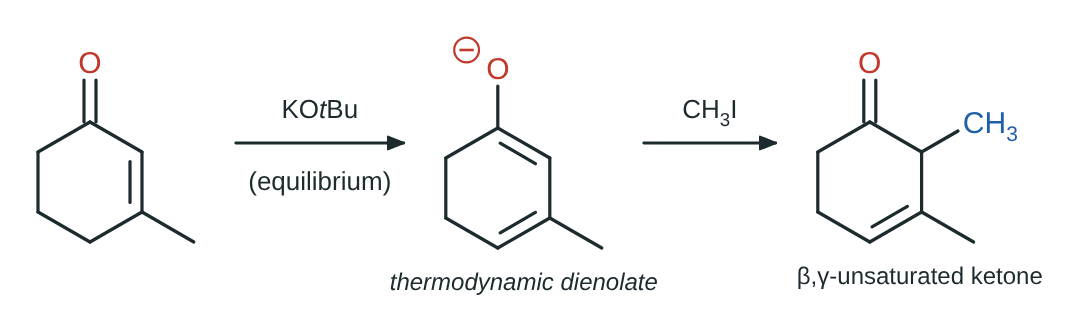
An α,β-unsaturated ketone can lose a proton from two sites: from the α′ carbon, on the other side of the carbonyl, or from the γ carbon, at the end of the conjugated system. Kinetically controlled deprotonation usually occurs preferentially at the α′ carbon adjacent to the carbonyl group; the polar effect of the carbonyl group is probably responsible for the faster deprotonation at this position. Deprotonation at γ gives a conjugated, more stable dienolate, which predominates under equilibrium conditions:
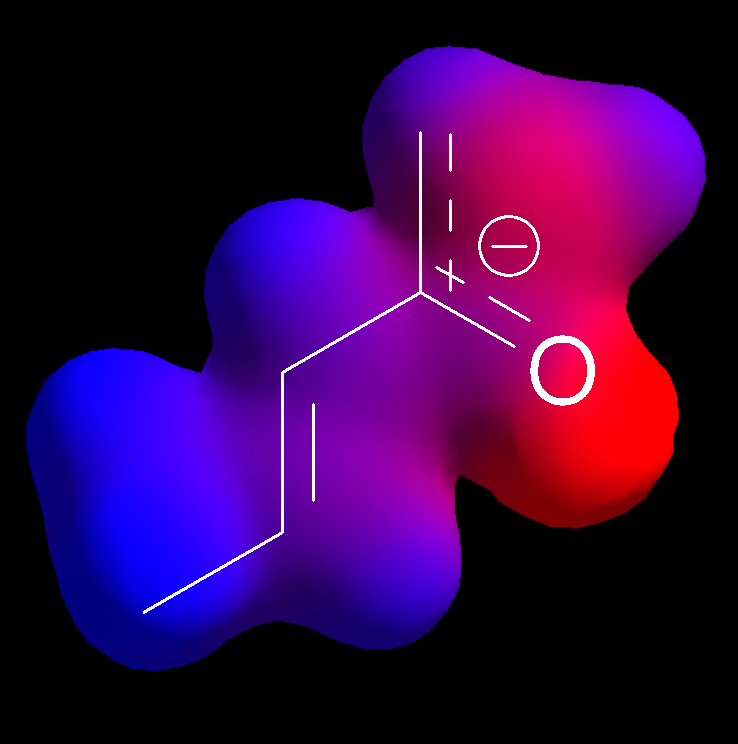
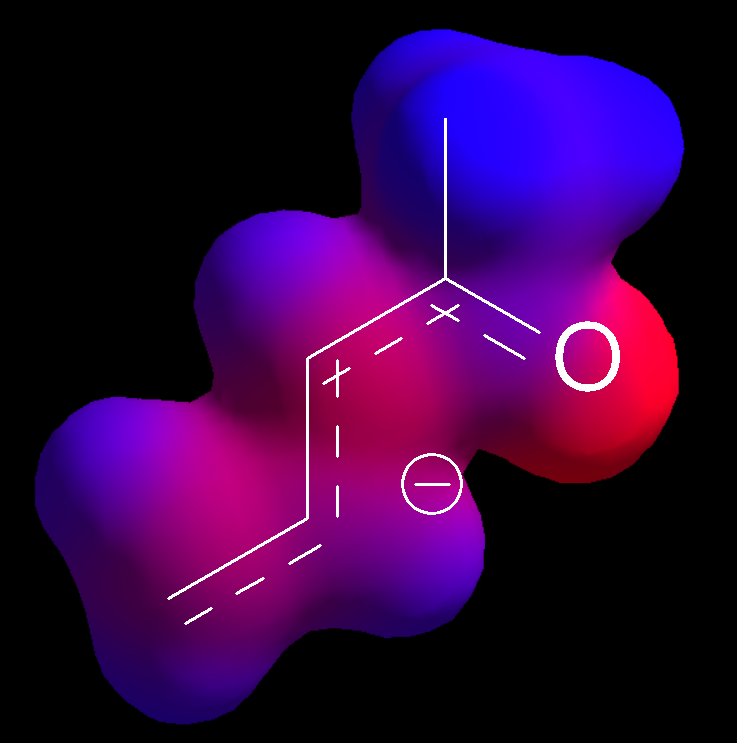
The electrostatic potential maps of the two anions show where the charge builds up (in red):
Alkylation of the dienolate: deconjugation
The kinetically preferred sites for both protonation and alkylation of the dienolate are the α carbons, not the γ carbon, even though the latter also bears part of the charge. That is why alkylation of the thermodynamic dienolate gives a ketone in which the double bond is no longer conjugated with the carbonyl but sits in the β,γ position:
Kinetic protonation of the dienolate also takes place at α and gives the β,γ-unsaturated ketone, which in the presence of acid or base isomerizes back to the more stable conjugated enone. To alkylate the γ carbon other strategies are used, such as the dianions of 1,3-dicarbonyl compounds (next section).