Nitronate and related anions
A nitronate (IUPAC name: azinate) is the conjugate base of a nitroalkane: the resonance form of an α-deprotonated nitro compound. Nitronates strongly resemble the enolates of carbonyl compounds.
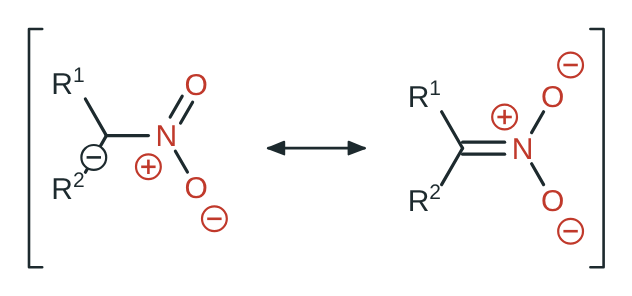
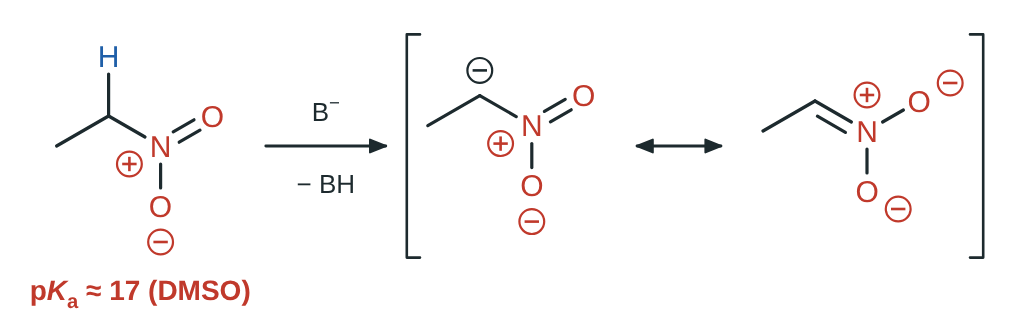
Deprotonation at the α carbon of a nitroalkane is almost as easy as at the OH of an alcohol: its pKa is around 17 in DMSO (about 9–10 in water). The nitro group stabilizes the charge even better than a carbonyl.
The Henry reaction
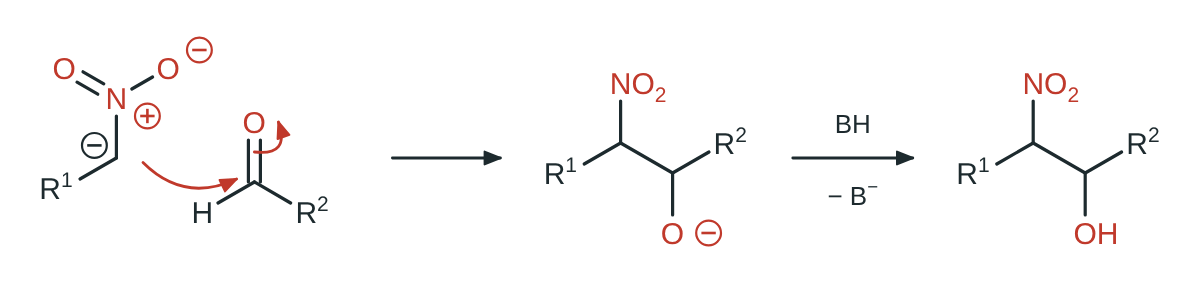
The so-called Henry reaction, discovered as far back as 1895, is based on nitronates: it is the addition of a nitroalkane to an aldehyde or ketone under basic conditions, a reaction analogous to the aldol reaction (hence its other name, the nitroaldol reaction). The β-nitro alcohols obtained are very versatile intermediates:
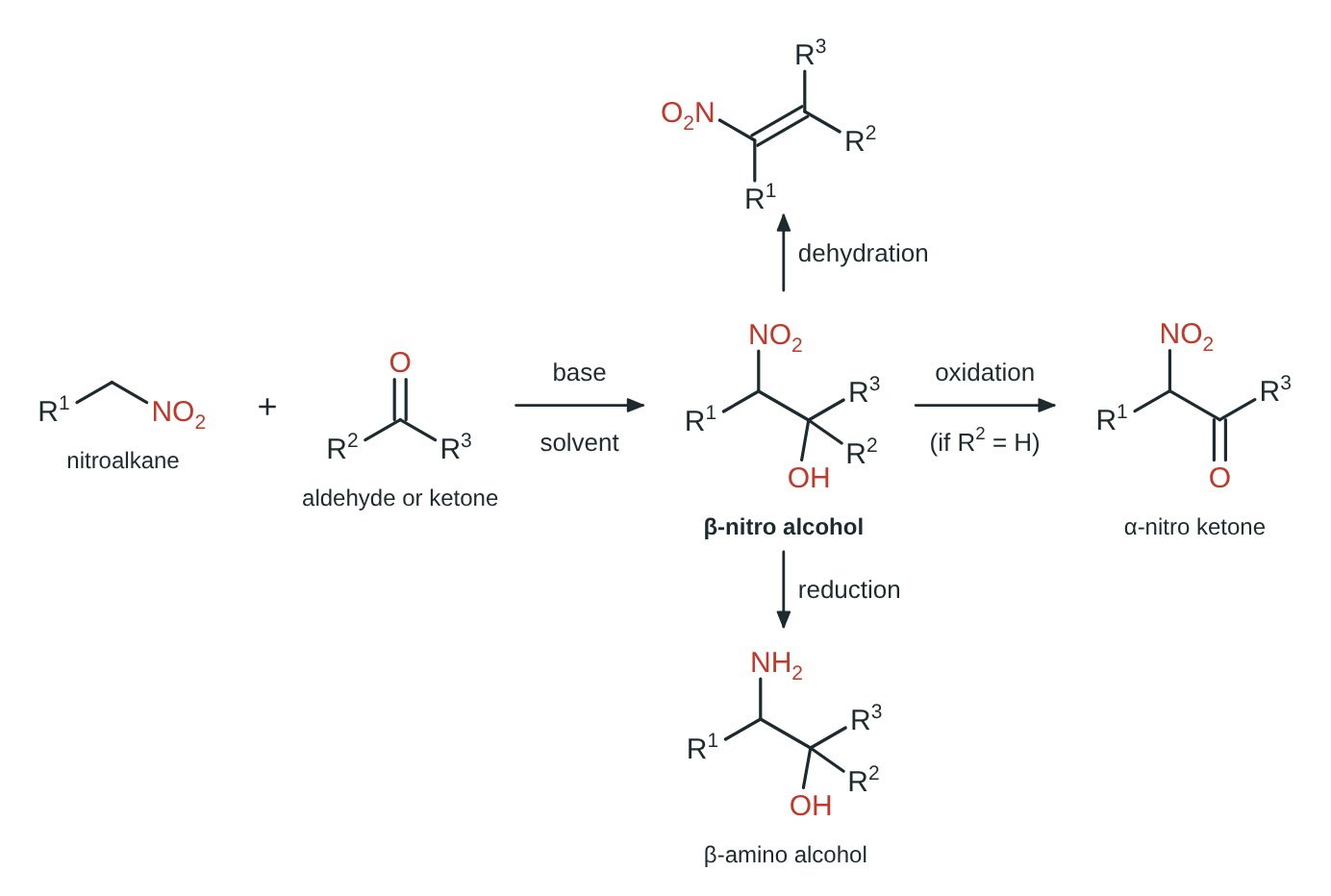
Its mechanism holds no surprises: the nucleophilic nitronate attacks the electrophilic carbonyl carbon and the resulting alkoxide is protonated.
Stereochemistry
In the absence of any additives, the nitronate and the aldehyde approach one another so as to minimize electrostatic repulsions, that is, with the electron-rich oxygen atoms in an anti arrangement. As for the R groups, the stereochemistry of the adduct depends on their bulkiness; the anti diastereomer usually predominates.
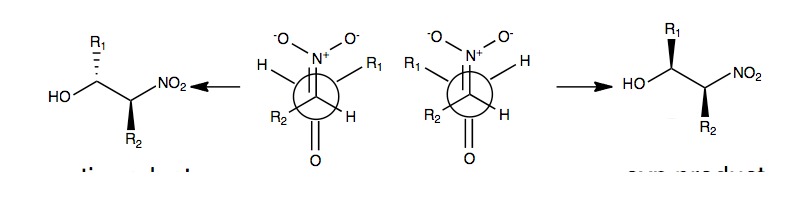
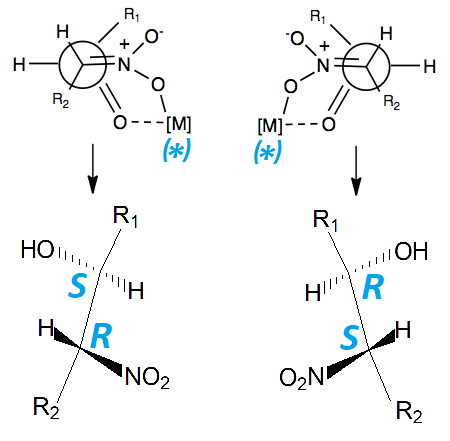
The diastereoselectivity of the reaction can be controlled by adding metal catalysts that chelate the oxygen atoms, thus forcing the nitronate and the aldehyde into a gauche arrangement. The bulky R groups prefer the anti arrangement as usual. If the metal catalyst is enantiomerically pure, the two approaches that were in principle mirror images become diastereomeric, and the reaction is not only diastereoselective but also enantioselective: