
Acid-Base Properties
The basicity of a carbonyl group can be studied from the acidity of its protonated form. The higher the acidity of the protonated form, the lower the starting carbonyl's basicity.
Basicity of the carbonyl group
The higher the participation of the third resonance form, the more stable (less acidic) the protonated form of a carbonyl group. Hence, the higher the L group's ability to release electrons, the larger the carbonyl group's basicity.
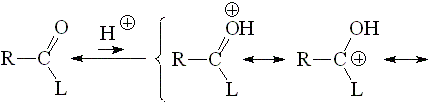
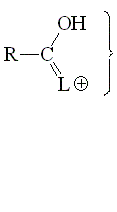
Can you rationalize in the previous terms the following pKa values?

pKa = -8.0
The third resonance form is not possible when L = H. The protonated form is thus very unstable. Aldehydes are the least basic in the series.

pKa = -7.2
The methyl group can only stabilize the positive charge by hyperconjugation. Yet, that tiny stabilization makes ketones be slightly more basic than aldehydes.
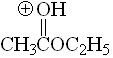
pKa = -6.5
The alkoxy group can stabilize the positive charge by mesomeric effect and the third resonance form makes full sense. That's why esters are more basic than ketones.

pKa = -6.0
The fact that, in a protonated carboxylic acid, the first and third resonance forms are equivalent gives extra stabilization. That accounts for the paradox that a carboxylic acid is the most basic species of this series.
Acidity of α-hydrogens
As in aldehydes and ketones, the α hydrogens to an ester are feebly but usefully acidic, due to the delocalization of the negative charge towards the carbonyl group. Does the L group have anything to do with this?

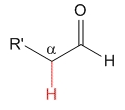
pKa = 17
Aldehyde's hydrogen does not exert any special effect and pKa = 17 can be taken as a reference acidity value for the α hydrogens to a carbonyl group.
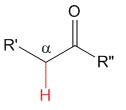
pKa = 20
Alkyl groups are electron releasing by inductive effect and therefore they destabilize the anion, thus making ketones' α hydrogens less acidic than aldehydes'.
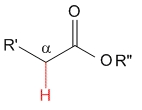
pKa = 25
Alkoxy groups are strong electron releasing by mesomeric effect and destabilize the anion even further, thereby causing the lowest acidity for esters in the studied series.