
Home and Industry
Plastics, paints, adhesives, cleaning products… Many of the objects around us at home come from the organic chemical industry, which turns a few raw materials (petroleum, natural gas and biomass) into thousands of different products.
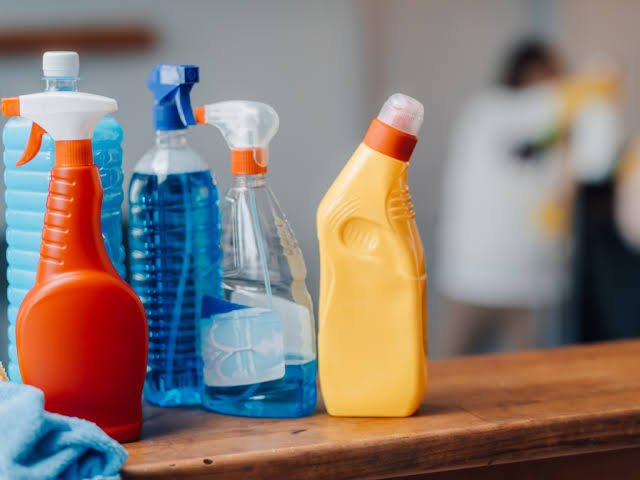
Plastics
Plastics are synthetic polymers. Many are obtained by the polymerization of alkenes, which join one another by opening their double bond:
- Polyethylene (PE): bags, cling film, detergent bottles.
- Polypropylene (PP): caps, food containers, carpet fibres.
- Poly(vinyl chloride) (PVC): pipes, window frames, flooring.
- Polystyrene (PS): disposable cups and, as a foam, the white packaging material.
- PET: a polyester, used in water and soft-drink bottles.
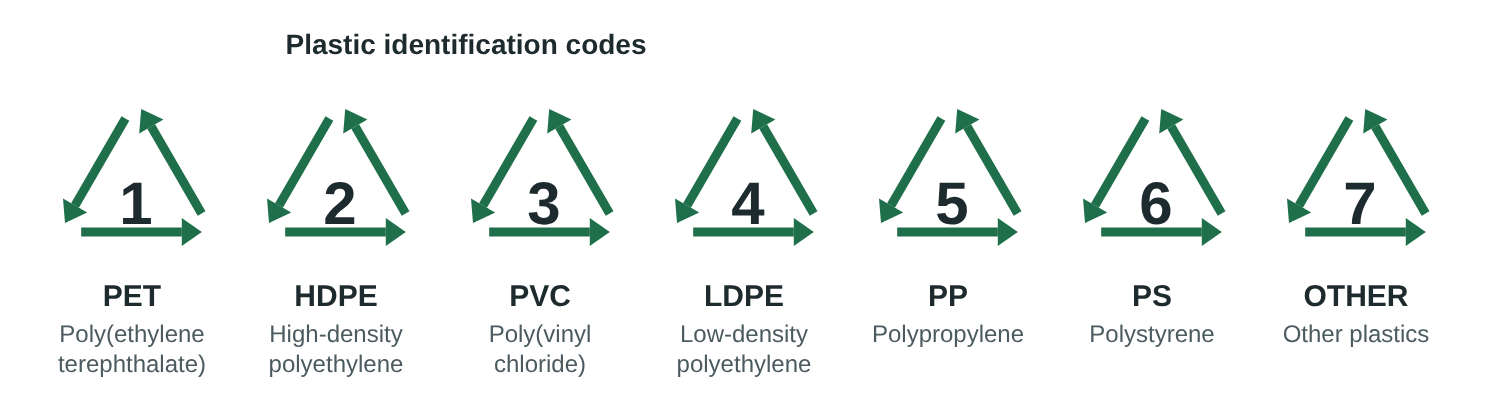
The numbers 1 to 7 inside the recycling triangle identify the type of plastic so that they can be sorted:
Thermoplastics (like the ones above) can be melted and moulded again; thermosets (epoxy resins, Bakelite) form networks that do not melt.
Cleaning products
- Detergents: surfactants with a polar part and a non-polar part that carry away grease, like soaps.
- Solvents: isopropyl alcohol or acetone dissolve stains that water cannot remove.
- Descalers: organic acids such as citric acid or acetic acid (the acid of vinegar) dissolve limescale (calcium carbonate).
- Bleach: sodium hypochlorite is an inorganic compound, but it whitens and disinfects by oxidizing the organic molecules of stains and microorganisms.
Bleach must never be mixed with ammonia (toxic chloramines are formed) or with acidic products (chlorine gas is released).
Paints and adhesives
Paints contain a binder (an acrylic, alkyd or epoxy resin) that forms a film as it dries or reacts with the air, pigments and a solvent or water. “Superglue” is methyl or ethyl cyanoacrylate: the moisture in the air starts its polymerization and turns it into a plastic in seconds.
The large chemical industry
A few simple compounds (ethylene, propylene, benzene, methanol) are the starting point of thousands of products. Green chemistry seeks to make them with less waste and fewer risks: catalysts instead of excess reagents, less toxic solvents, renewable raw materials and processes that make the most of the atoms of the reagents.