
Stereochemistry
The Diels-Alder reaction is regioselective and stereospecific: the "ortho" and "para" adducts predominate, the addition is syn with respect to both the diene and the dienophile and, with cyclic dienes, the endo adduct predominates.
When diene and dienophile bear substituents two different regiochemical approaches are possible. Yet, a well known experimental fact is that the "meta" adduct is NEVER the major component.
 ▶ Watch the video on YouTube
Regiochemistry
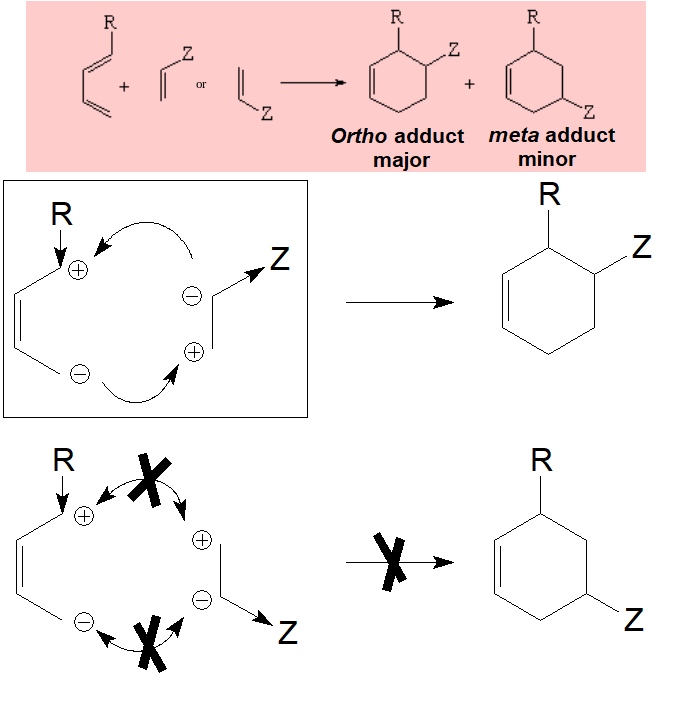
Diene substituted at one end (carbon 1)
The resonance forms show how the reactants are polarized. Of the two charge-separated forms of the diene, the more favourable one places the positive charge next to the donor group R, which releases electron density to it and leaves a partial negative charge at the opposite end (carbon 4); in the dienophile the reverse happens, and the more favourable resonance form places the negative charge next to the withdrawing group Z, leaving a partial positive charge on the β carbon, the one farther from Z.
The two new bonds form between carbons of opposite charge: Carbon 4 of the diene bonds to the β carbon and carbon 1 to the α carbon. Thus R and Z end up on adjacent ring carbons: this is the "ortho" (1,2) adduct, which predominates.
The opposite orientation would bring together charges of the same sign (the crossed-out arrows), which is why the "meta" (1,3) adduct is minor.
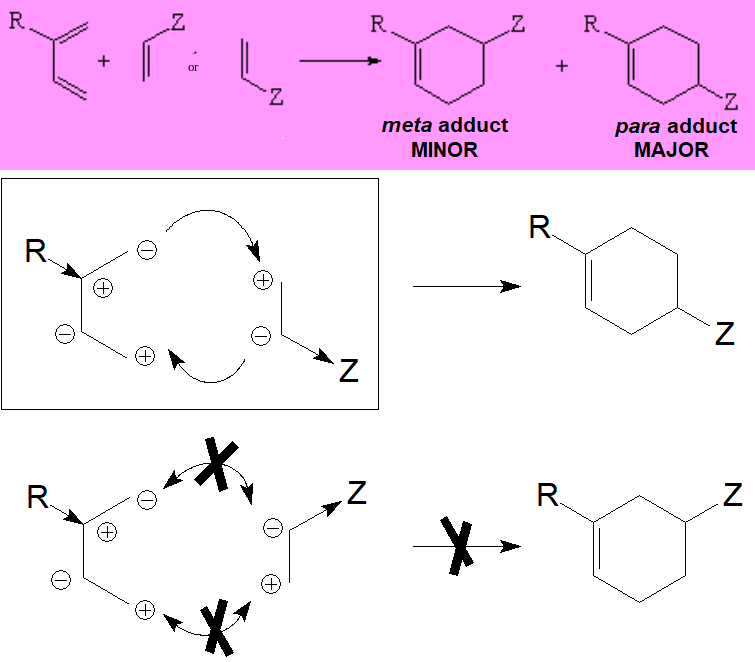
Diene substituted at position 2
Now the donor group R is on carbon 2 and the partial negative charge appears on carbon 1, the end next to R. This carbon bonds to the β carbon of the dienophile, and carbon 4 of the diene to the α carbon, which bears Z.
As a result, R and Z end up on opposite positions of the ring: the "para" (1,4) adduct predominates. Again, the orientation that would give the "meta" adduct brings together charges of the same sign.
Rule of thumb: dienes substituted at one end give the "ortho" adduct and those substituted at position 2 give the "para" adduct; the "meta" adduct never predominates.
Stereochemistry
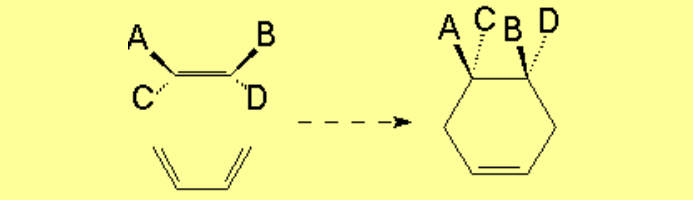
Relative to the dienophile, the addition is ALWAYS syn:
The cis groups in the olefin keep on being cis in the resulting cyclohexene. The trans groups in the olefin keep on being trans in the resulting cyclohexene.
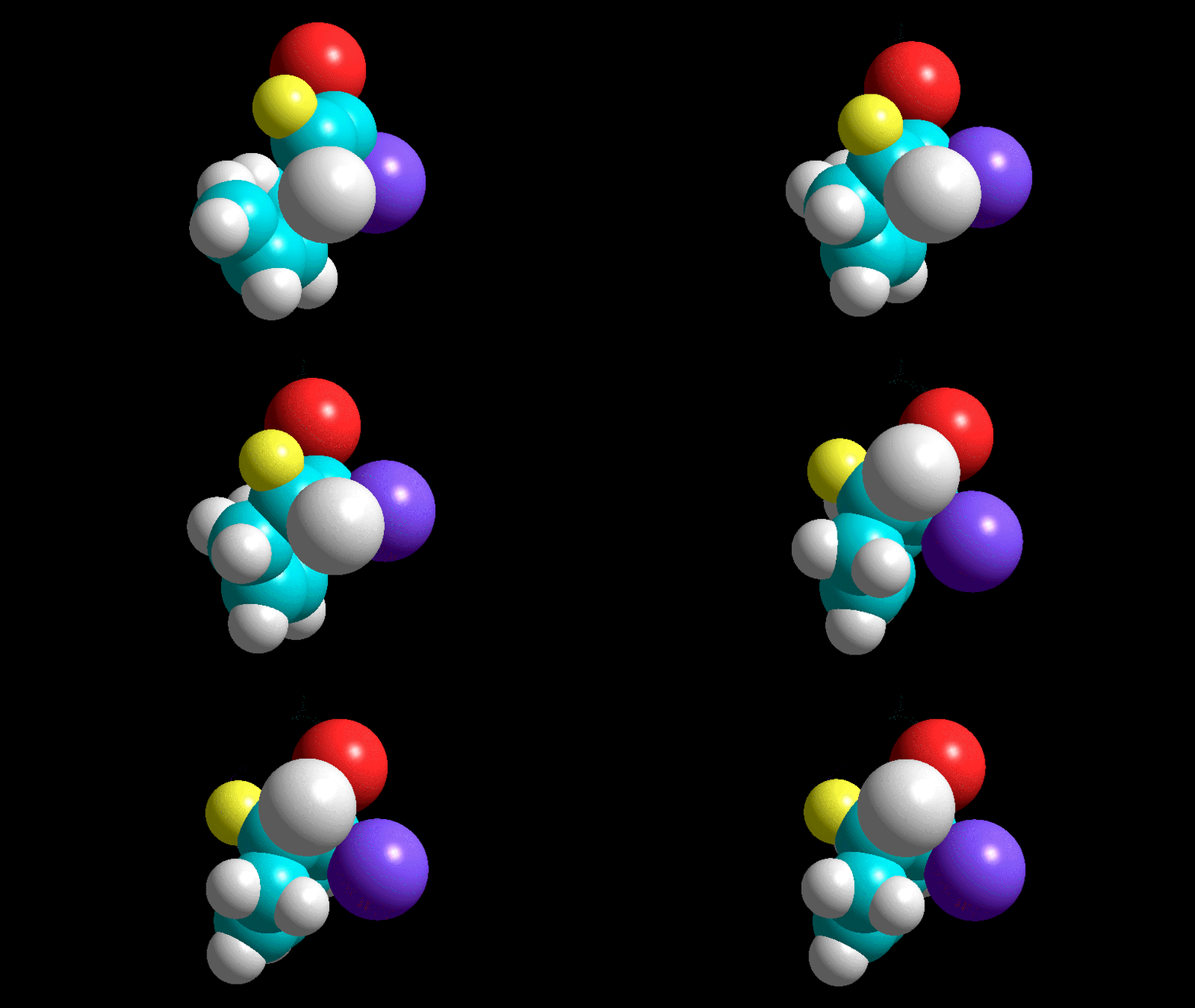

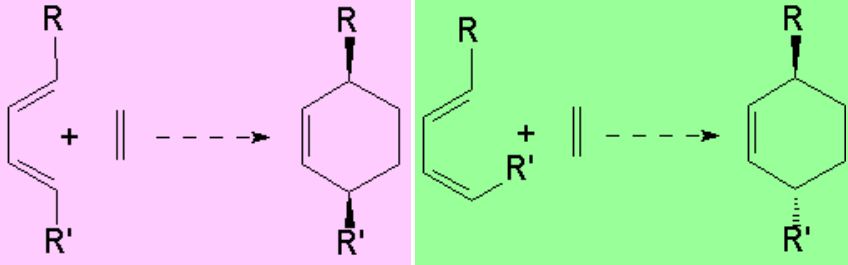
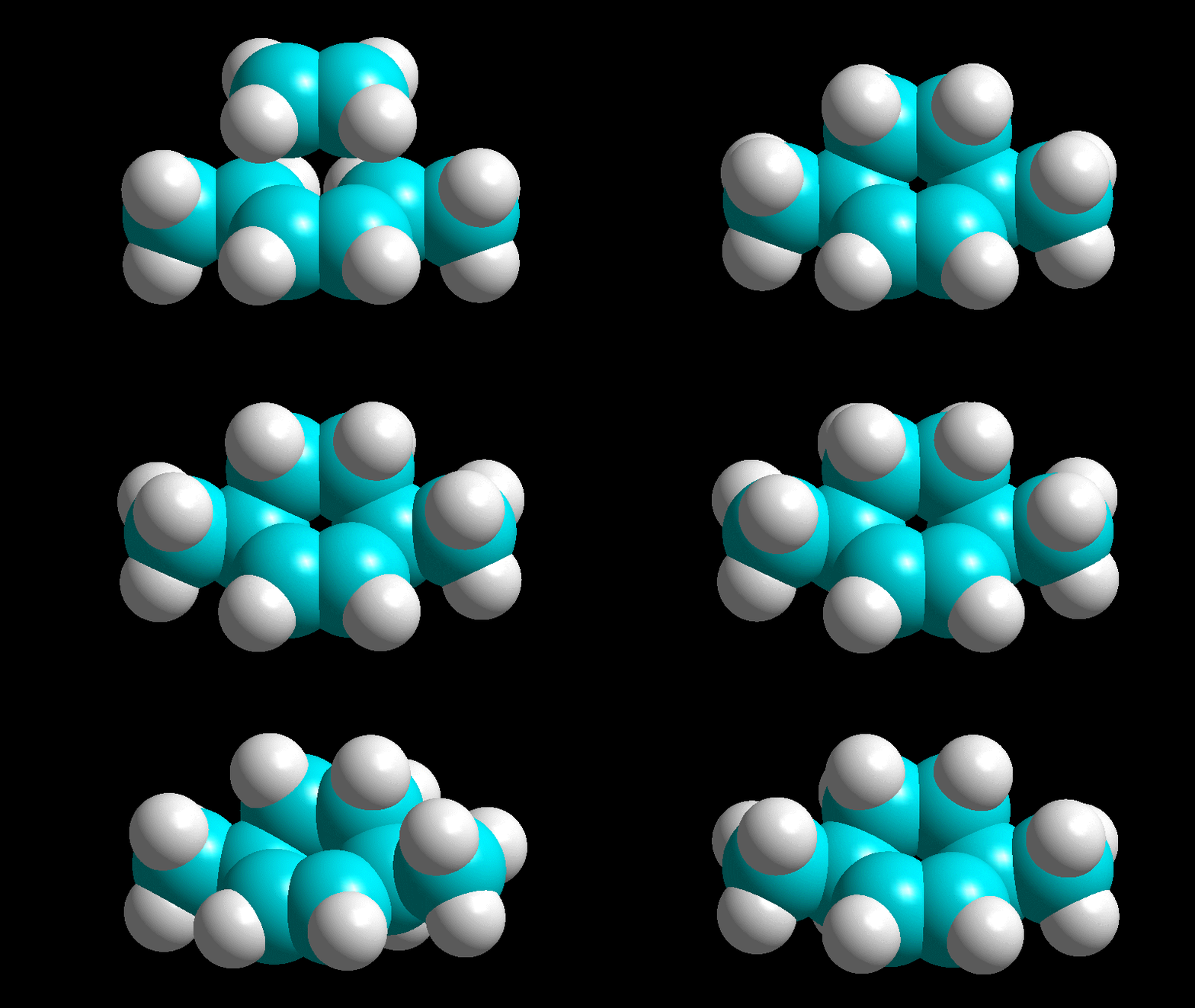
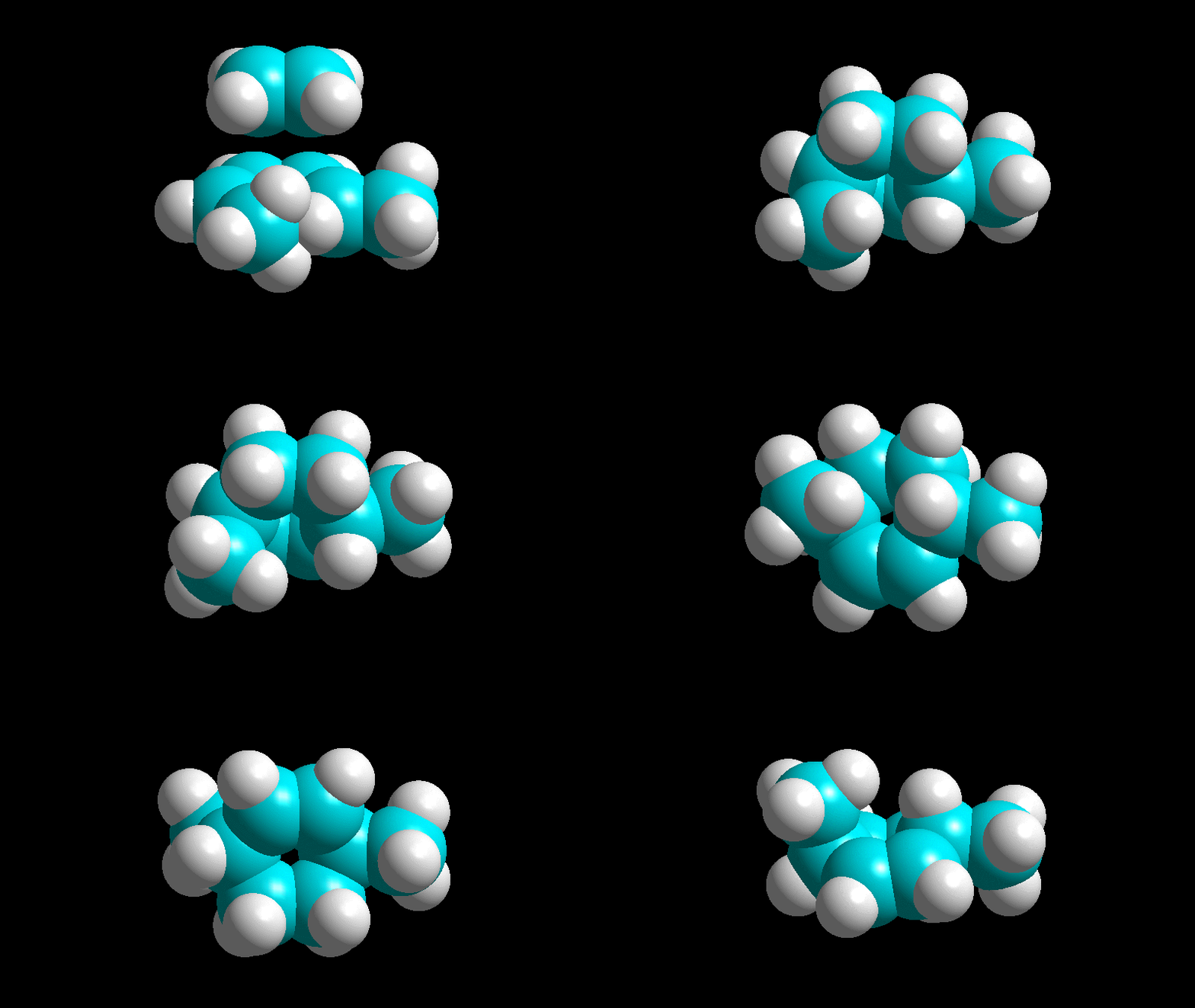
The addition is also syn concerning the diene:
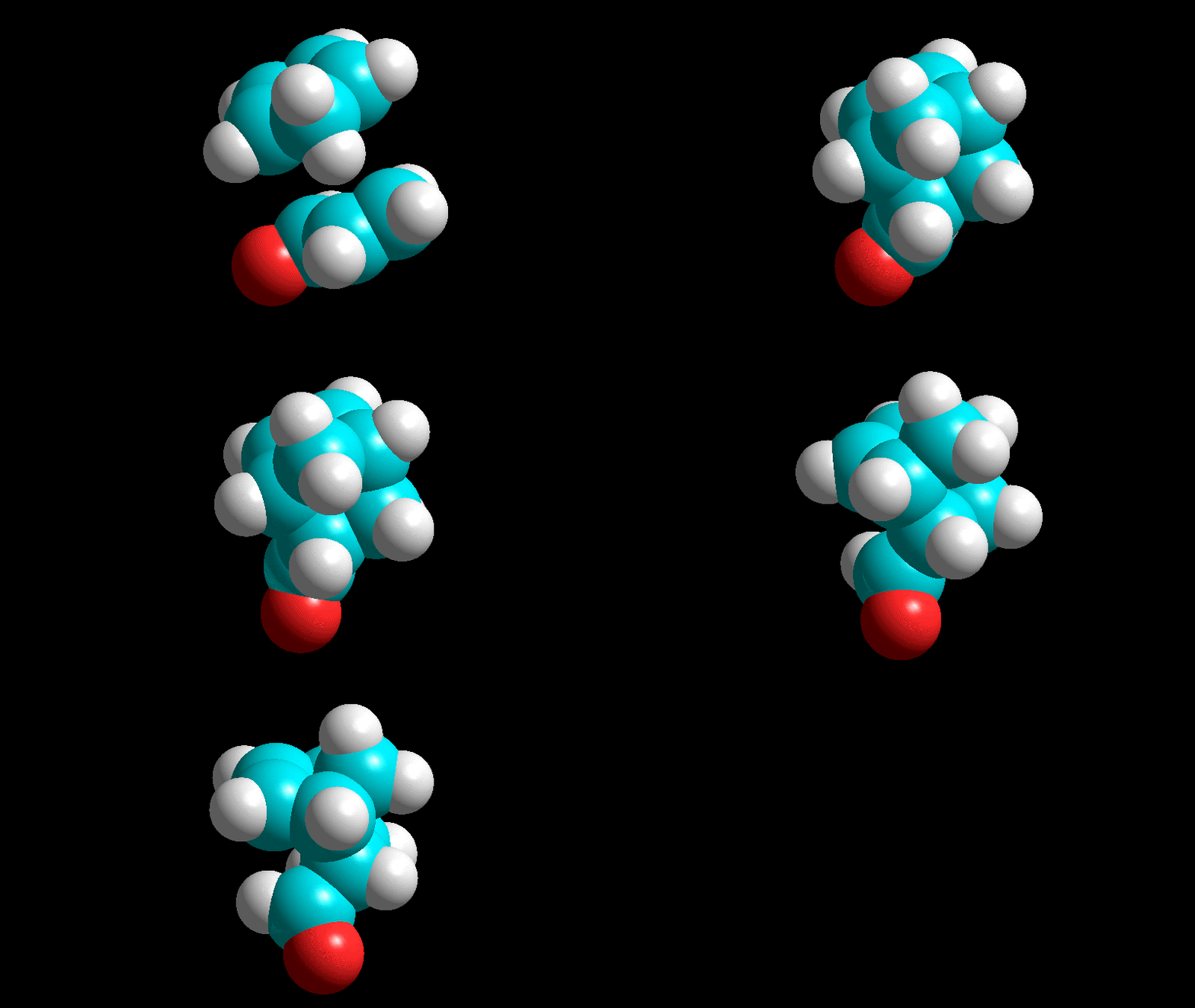
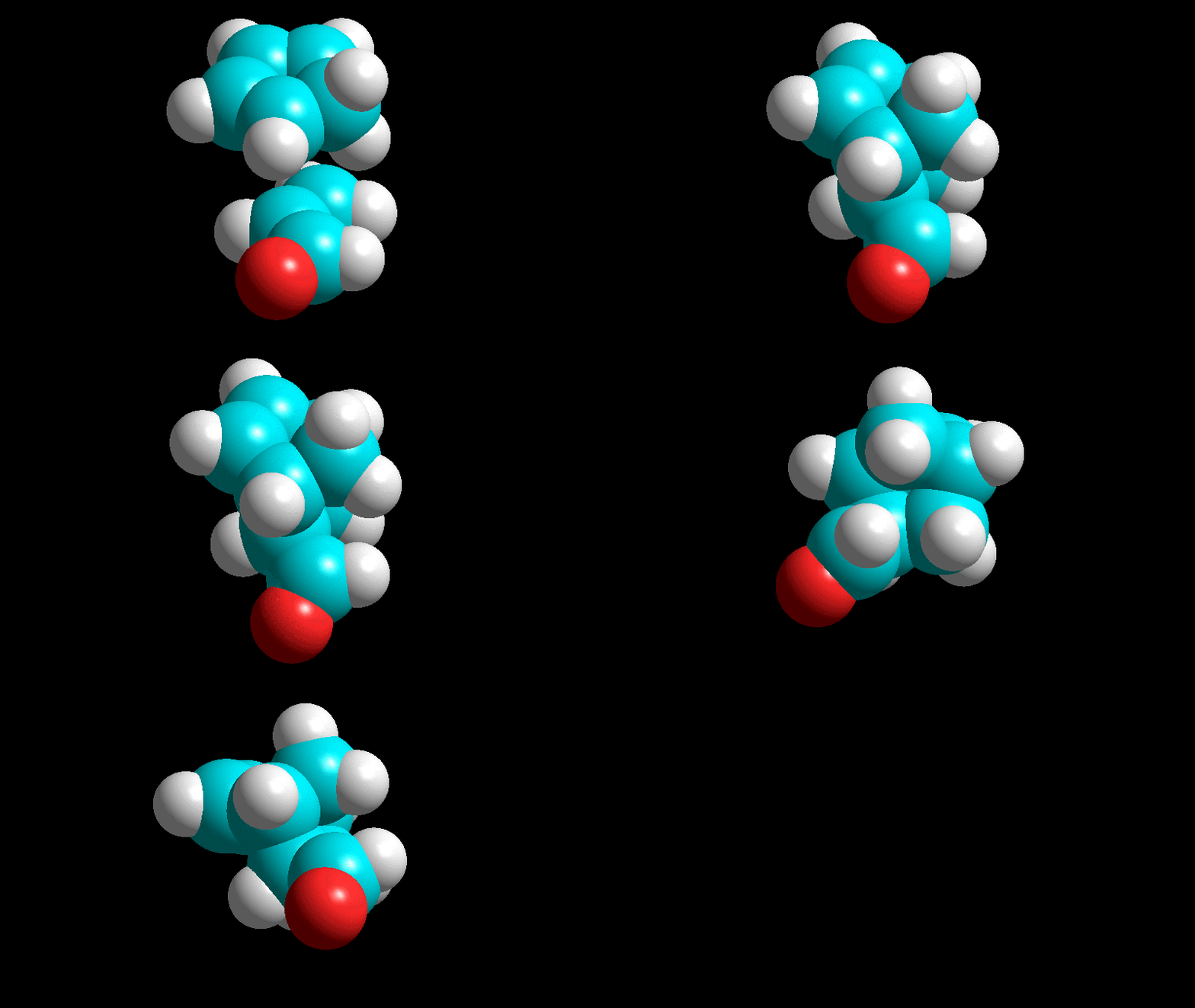
When the diene is cyclic and the dienophile is non-symmetric, there are two possible addition stereochemistries, so-called exo and endo. The endo adduct usually predominates:
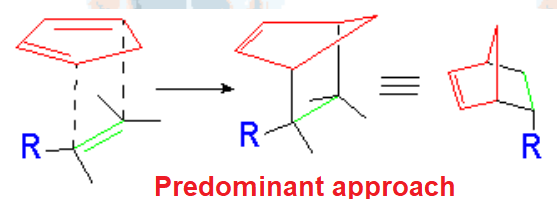
The dienophile adds with the R group poised to the inside (endo) of the diene system, leading to a bicyclic compound (norbornene) with the R group in endo arrangement.
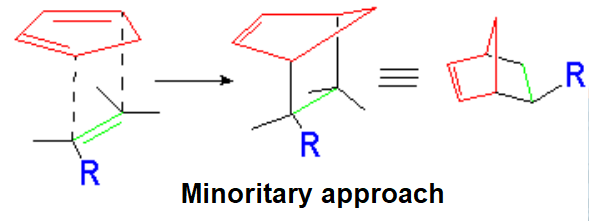
The dienophile adds with the R group pointing to the outside (exo) of the diene system, yielding a bicyclic compound (norbornene) with the R group in exo arrangement.
The cube trick
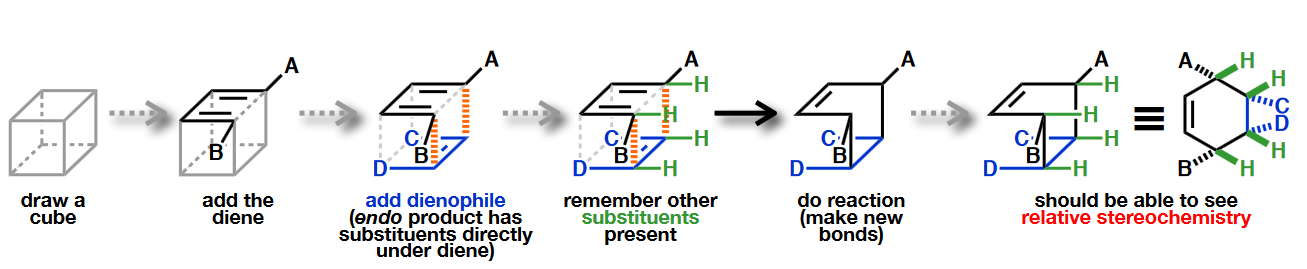
In all cases, if the final adducts end up with new stereocenters and the starting materials are not enantiomerically pure, the final products must be racemic.