
Hygiene and Cosmetics
Soaps, shampoos, creams, perfumes and sunscreens are carefully formulated mixtures of organic compounds. Their effectiveness is explained by the structure of their molecules: their polarity, their solubility and the way they interact with skin, hair or light.
Soaps and detergents
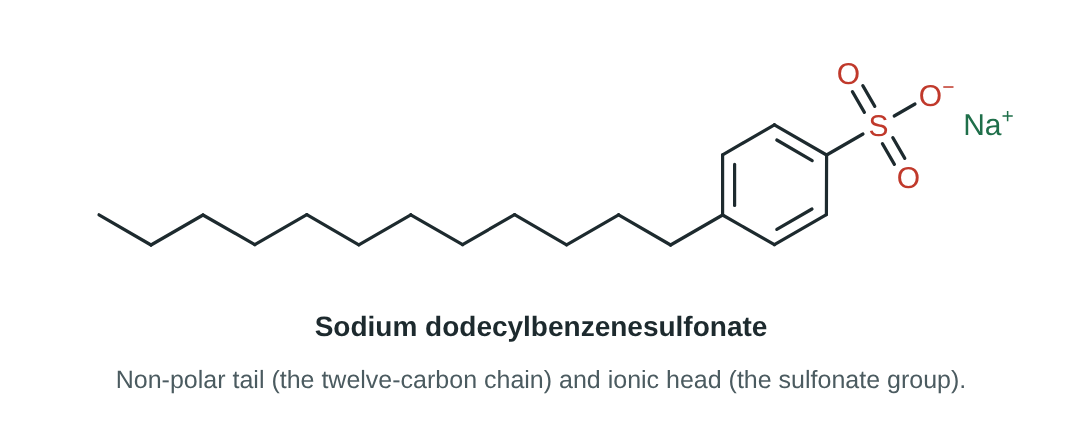
Soap has been made for thousands of years by heating fats with a base: this is saponification, the basic hydrolysis of the esters of glycerol, which leaves the sodium or potassium salts of the fatty acids. Each has an ionic “head” that surrounds itself with water and a hydrocarbon “tail” that dissolves in grease; in water they group together into micelles that trap greasy dirt and carry it away.
In hard water, calcium and magnesium ions form insoluble salts with soap (the “scum” in the bath). Synthetic detergents, such as alkylbenzenesulfonates, have the same polar-head, non-polar-tail structure but do not precipitate.
Creams and lotions
- Emulsions: almost all creams are mixtures of water and oil stabilized by emulsifiers, molecules with a polar part and a non-polar part, like soaps.
- Humectants: they hold water in the skin thanks to their OH groups, such as glycerol, an alcohol with three hydroxyl groups.
- Emollients: oils, waxes and esters that soften the skin and form a film that reduces water loss.
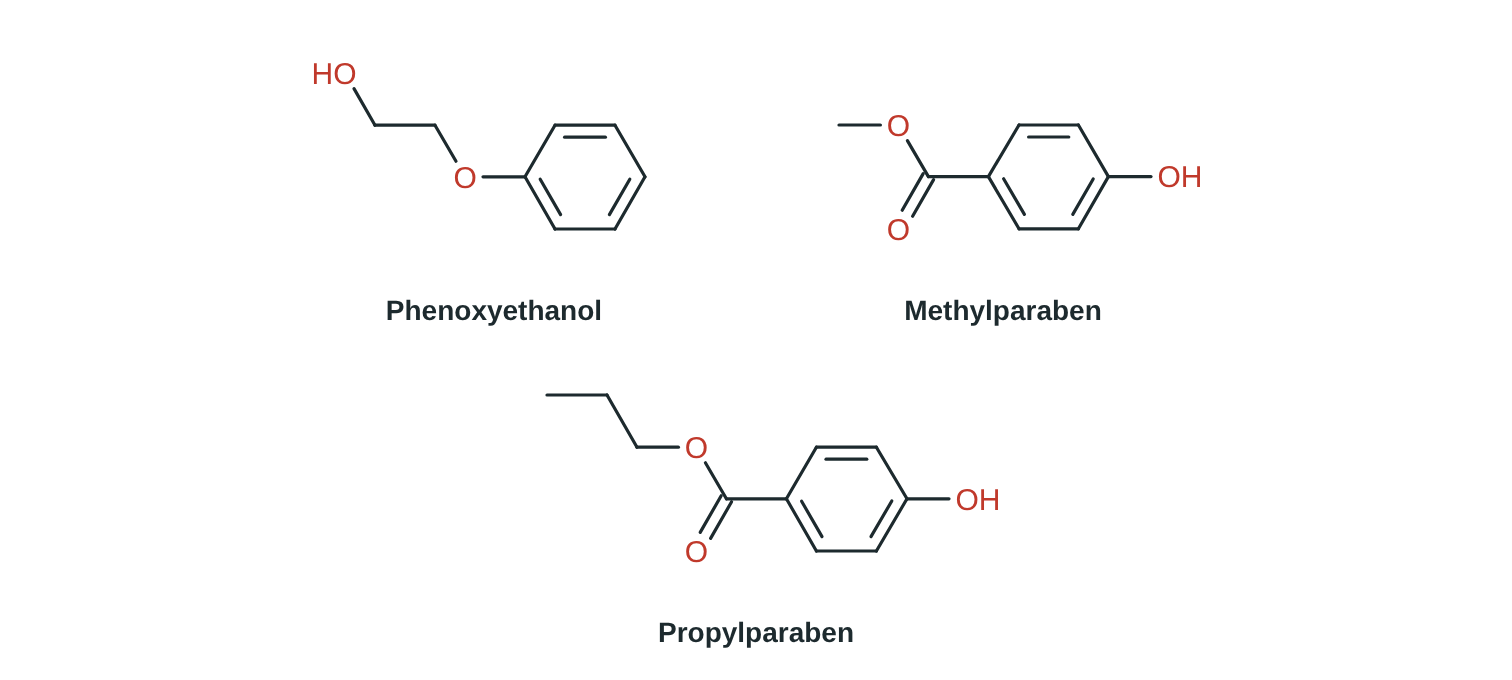
- Preservatives: they prevent the growth of microorganisms; for example, phenoxyethanol or the parabens, esters of p-hydroxybenzoic acid.
Perfumes
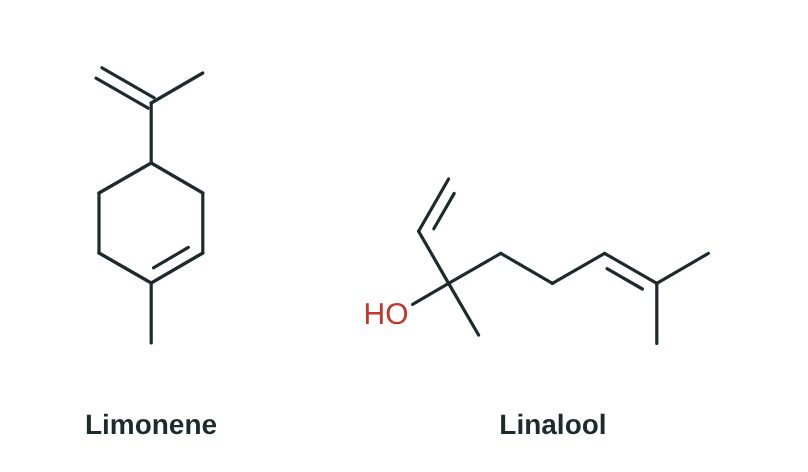
A perfume is an ethanol solution of dozens of volatile molecules: terpenes such as limonene (citrus smell) or linalool (lavender), aldehydes, musky-smelling ketones and fruity-smelling esters. The most volatile ones are perceived first (top notes) and the least volatile last for hours (base notes).
Sunscreens
Organic sun filters, such as avobenzone or octocrylene, are molecules with aromatic rings and conjugated double bonds that absorb ultraviolet radiation and dissipate it as heat before it can damage the DNA of skin cells.