
Medicine and Health
The vast majority of medicines are organic molecules, isolated from nature or designed and synthesized in the laboratory, that act by binding to a target in the body (an enzyme, a receptor, the DNA of a microorganism) and changing its function.

From nature to the laboratory
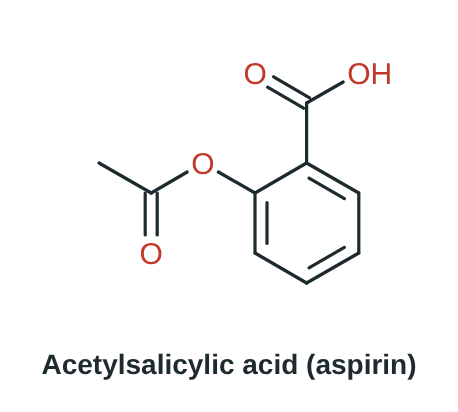
- Aspirin: willow bark was used against fever and pain because it contains salicin, from which salicylic acid derives. In 1897, at the Bayer company, Felix Hoffmann prepared acetylsalicylic acid, an ester better tolerated by the stomach.
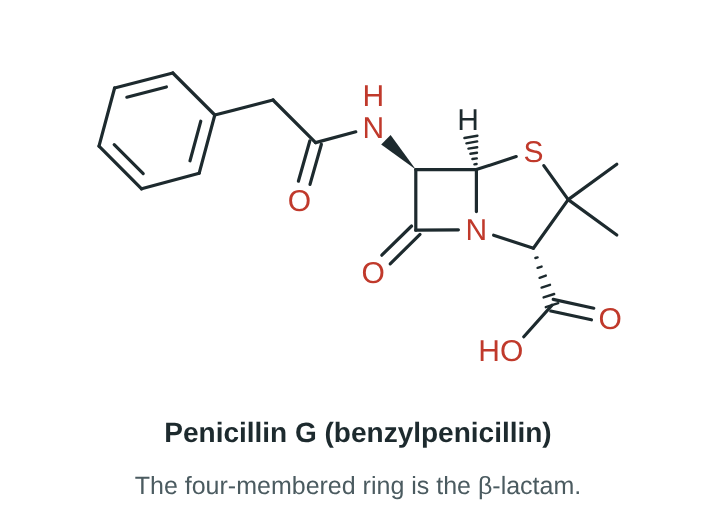
- Penicillin: discovered by Alexander Fleming in 1928 in a mould. Its β-lactam ring, a highly strained four-membered cyclic amide, reacts with the enzyme that builds the bacterial cell wall and disables it.
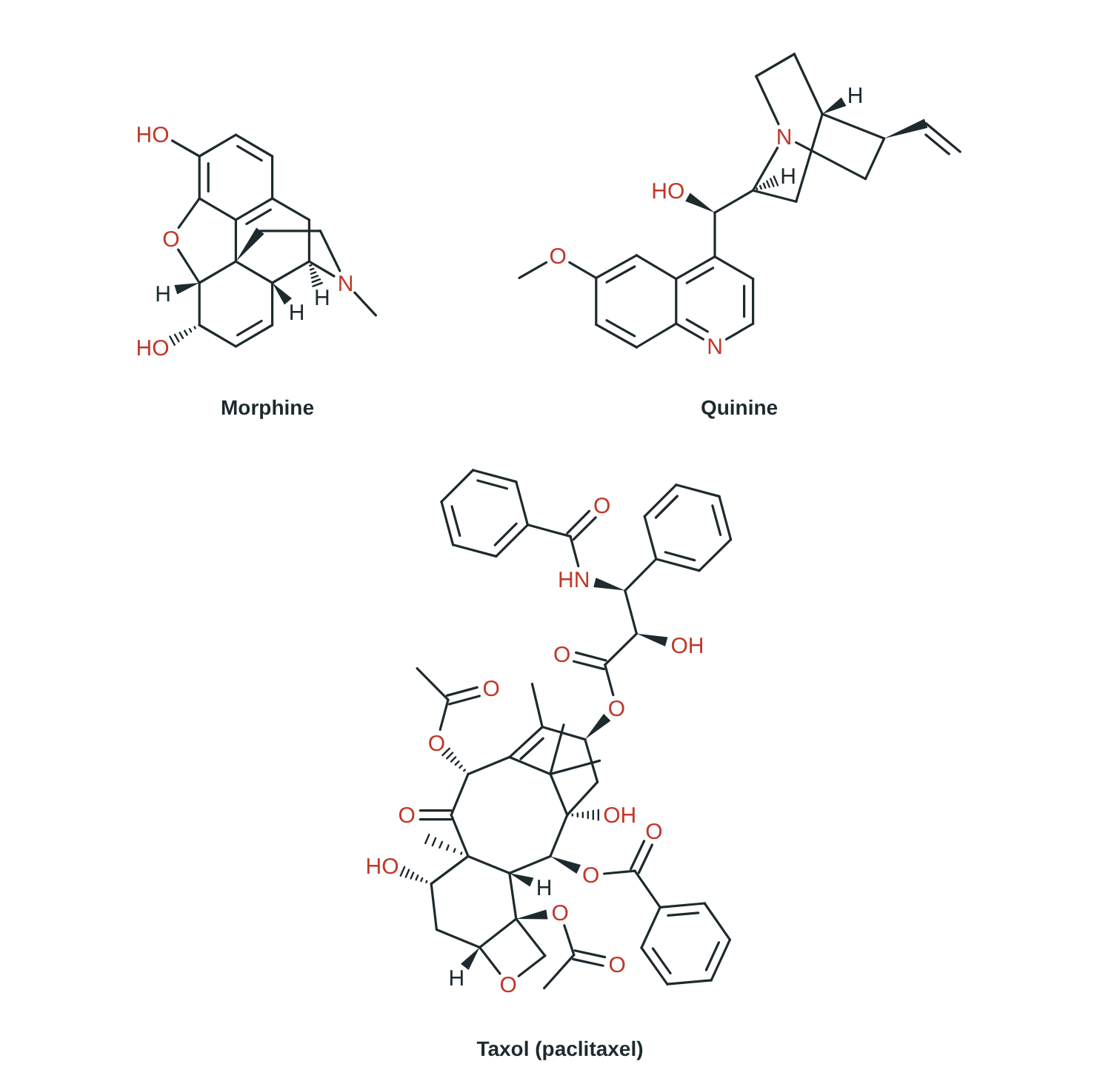
- Other natural products: morphine, from the opium poppy; quinine, from cinchona bark; or taxol (paclitaxel), an anticancer drug from the yew tree. Many current drugs are derivatives modified to improve their efficacy or reduce their side effects.
How they work
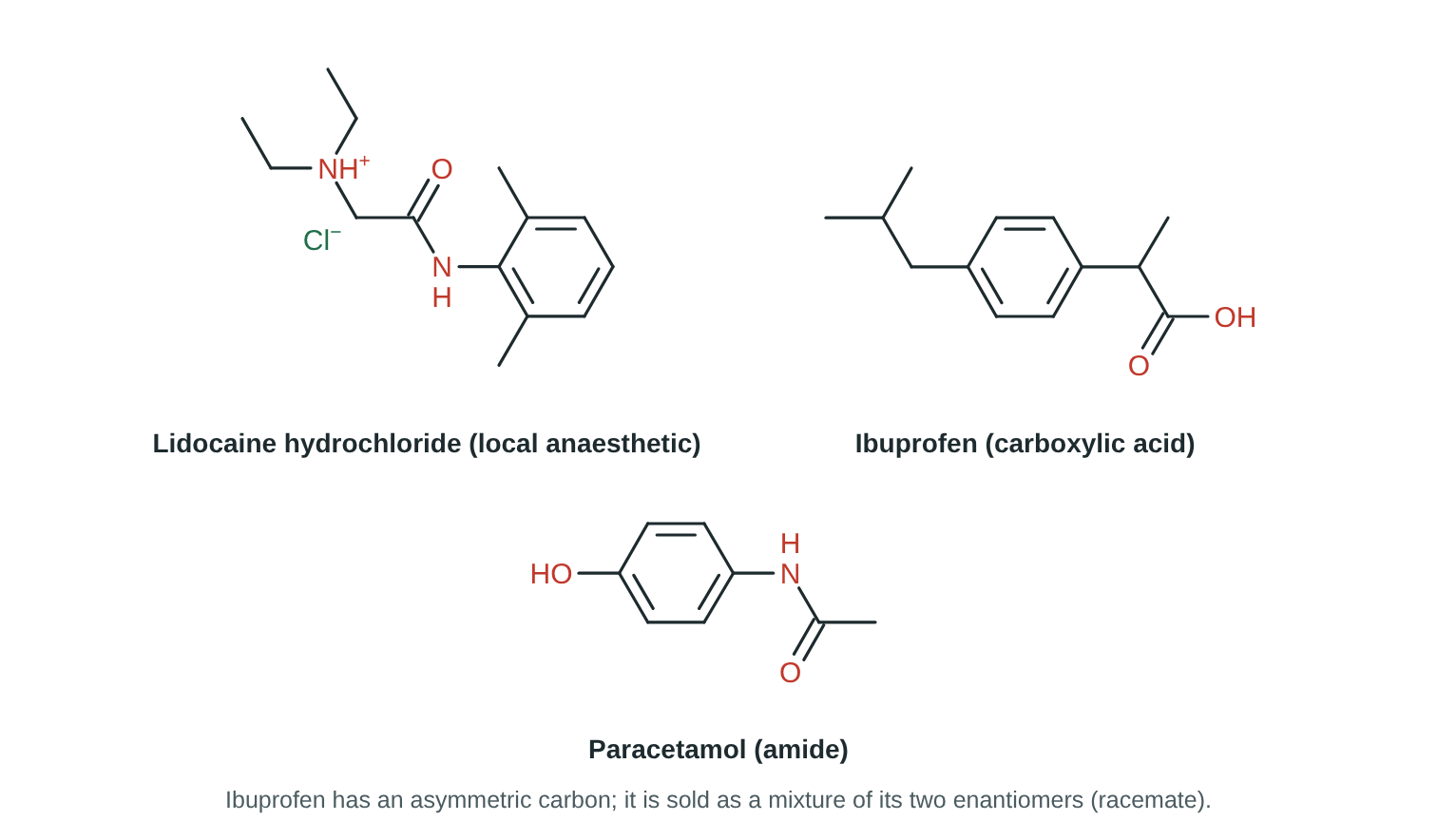
A drug fits its target like a key in a lock, thanks to hydrogen bonds, ionic interactions and forces between non-polar parts. That is why its three-dimensional shape matters so much: the two enantiomers of a chiral molecule can have very different activities. In ibuprofen, for example, the active painkiller is the S enantiomer. This video on my channel shows how the enantiomers of ibuprofen are separated:
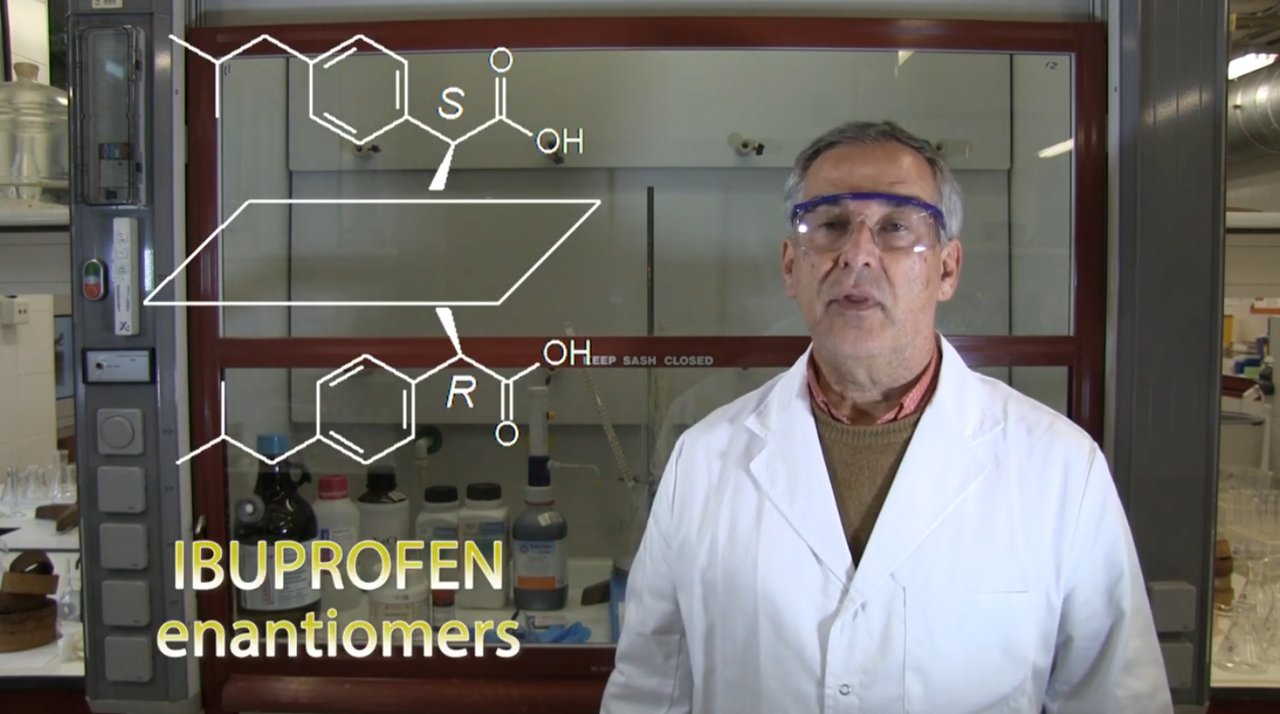 ▶ Watch the video on YouTube
Functional groups also decide how a medicine is absorbed and distributed. Many drugs are amines sold as salts (hydrochlorides), which are much more soluble in water; ibuprofen is a carboxylic acid and paracetamol is an amide.
From design to the pharmacy
A new medicine requires synthesizing and testing thousands of molecules, purifying the promising ones (see how to separate and purify an organic compound), confirming their structure (see how to determine the structure) and passing years of clinical trials. That is why purity is so important in pharmacy: an impurity can change the efficacy or the safety of the product.