Electrophilic Addition of Halogens
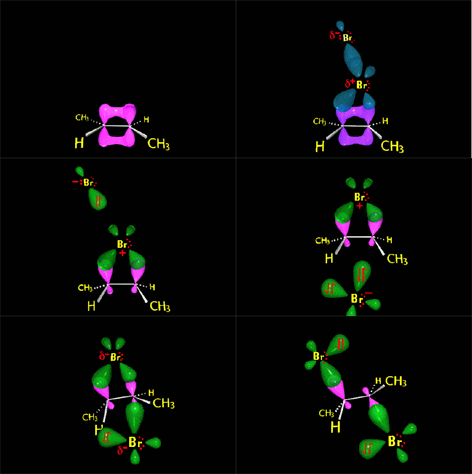
The π cloud of the C=C double bond can induce the heterolytic cleavage of the bromine molecule, giving rise to an intermediate with the structure of heterocyclopropane
(halonium ion).


The cyclic intermediate is opened by the halide counterion, leading to a vicinal dihalo derivative of anti stereochemistry.

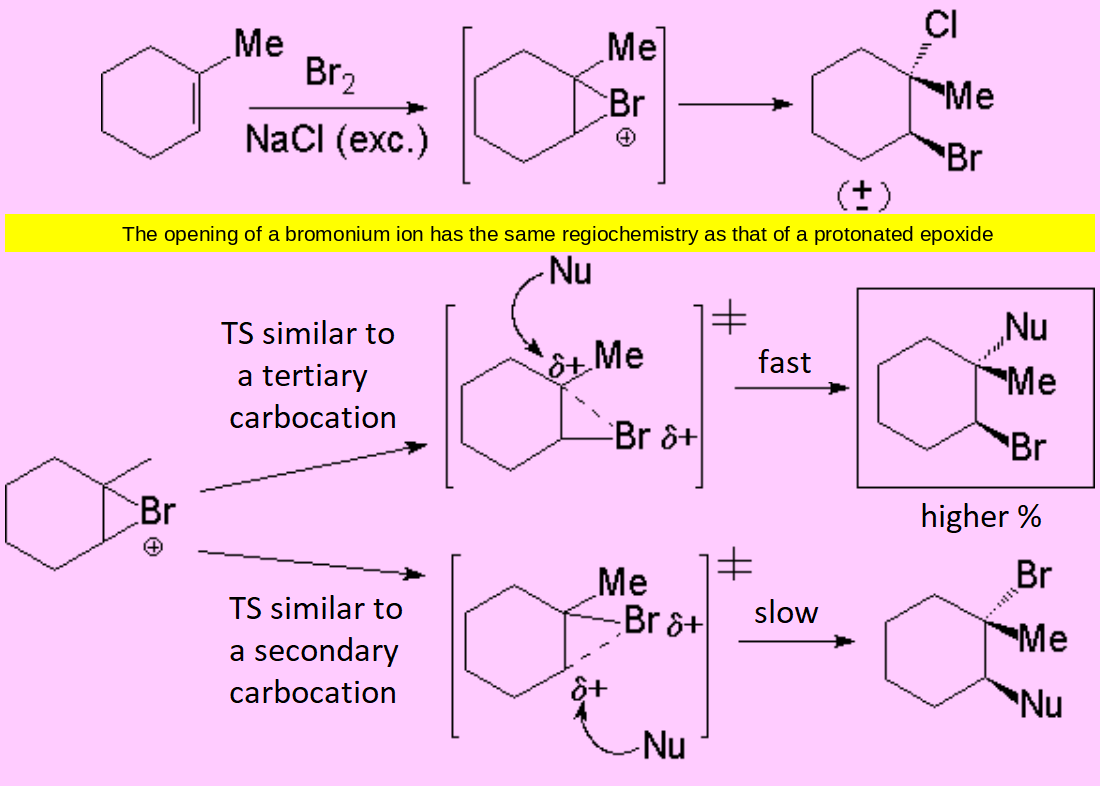
The opening of the halonium ion closely resembles that of a protonated epoxide. Click here to see the comparison.
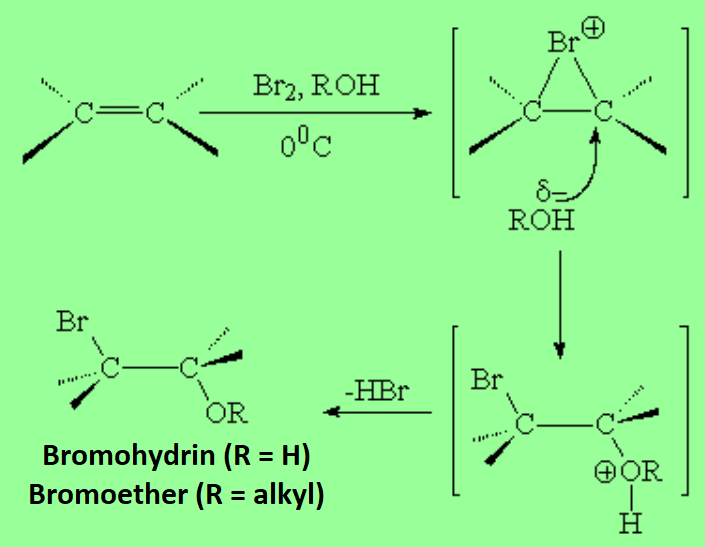
The halonium ion, once it is produced, can be captured with all sorts of nucleophiles:
If the nucleophile is water or alcohols, one gets halohydrins or haloethers, respectively.
This is an excellent way of functionalizing two carbons at once.