Protection of functional groups
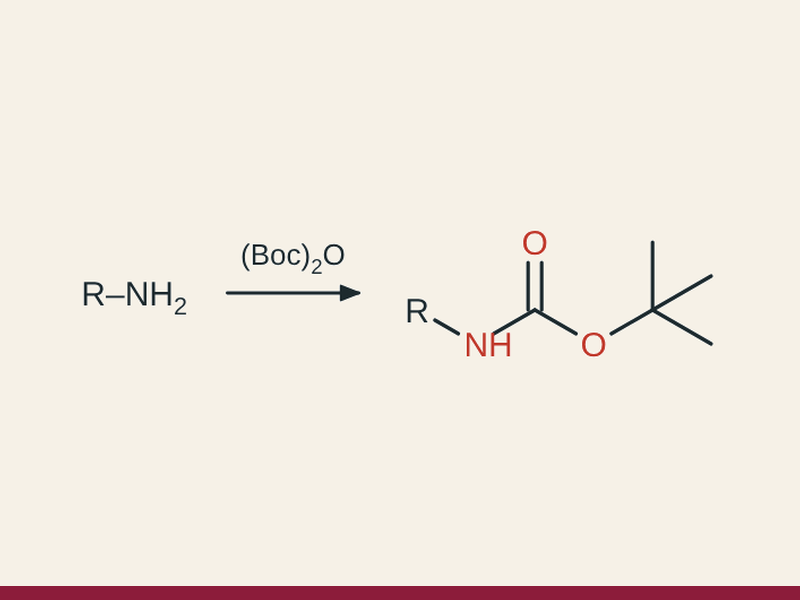
A protecting group temporarily masks a functional group so that it does not react under the conditions aimed at another group in the molecule. It costs two extra steps, protection and deprotection, which is why a good protecting group is introduced and removed in high yield and under mild conditions.
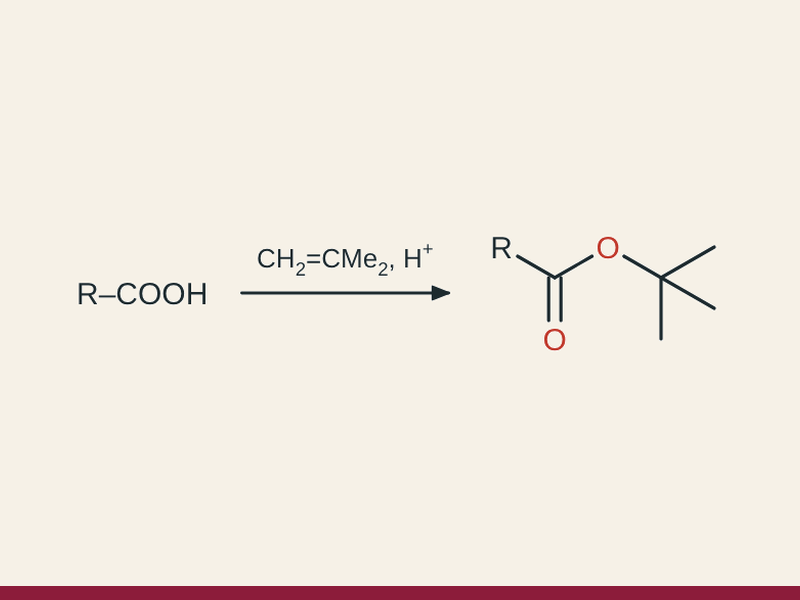
Protection is an answer to a problem of chemoselectivity: when there is no reagent that can tell two groups apart, one of them is disabled. The typical case is a Grignard reagent that must be prepared in a molecule with an OH, NH or COOH group, whose proton would destroy it, or a reduction with LiAlH4 that must spare a ketone while reducing an ester.
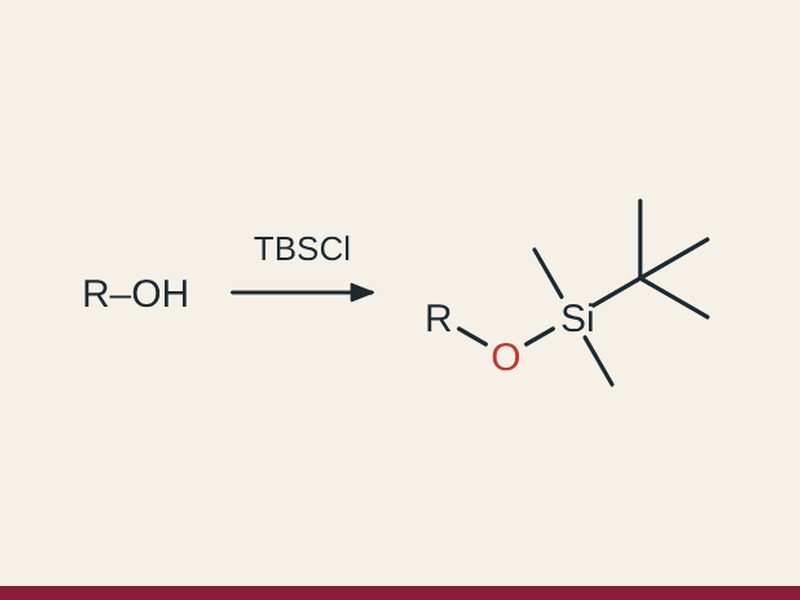
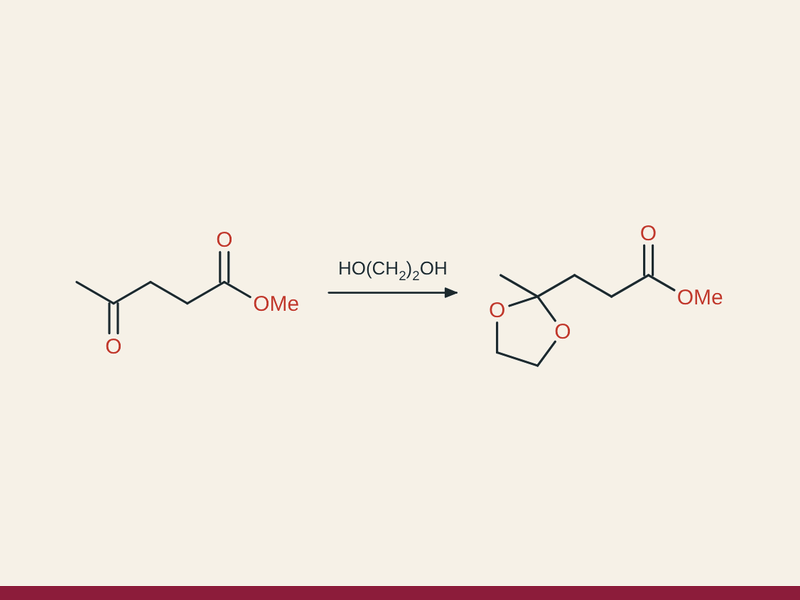
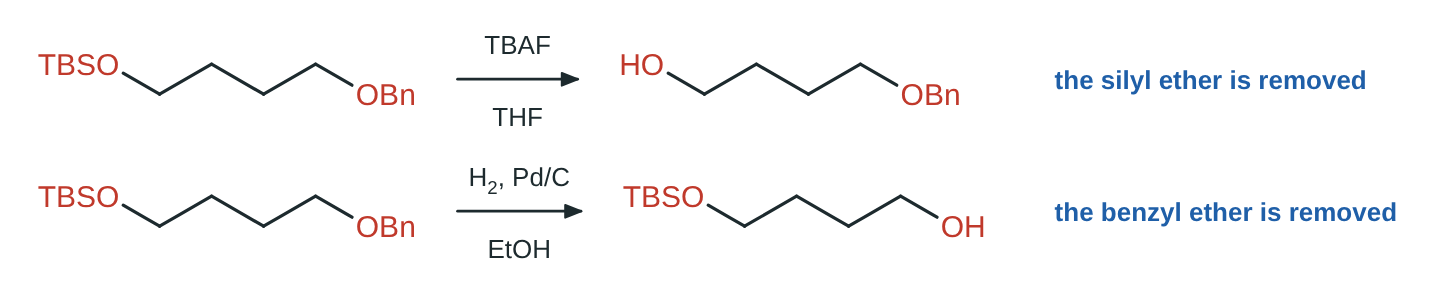
When a molecule carries several protected groups, each should be removable under conditions that do not affect the others: this is orthogonal protection. A silyl ether is cleaved by fluoride, a benzyl ether by hydrogen and palladium, an acetal by aqueous acid and an ester by base; by combining them, the chemist decides in what order the groups are released. The syntheses of peptides, oligosaccharides and complex natural products depend on these combinations.
The best protection, however, is the one that is not needed. Modern chemistry looks for chemoselective reagents and sequences in which groups appear at the right moment, because each protection–deprotection pair lengthens the synthesis and lowers the yield. The most widely used protecting groups are gathered in the subpages below.