Facial control (asymmetric synthesis)
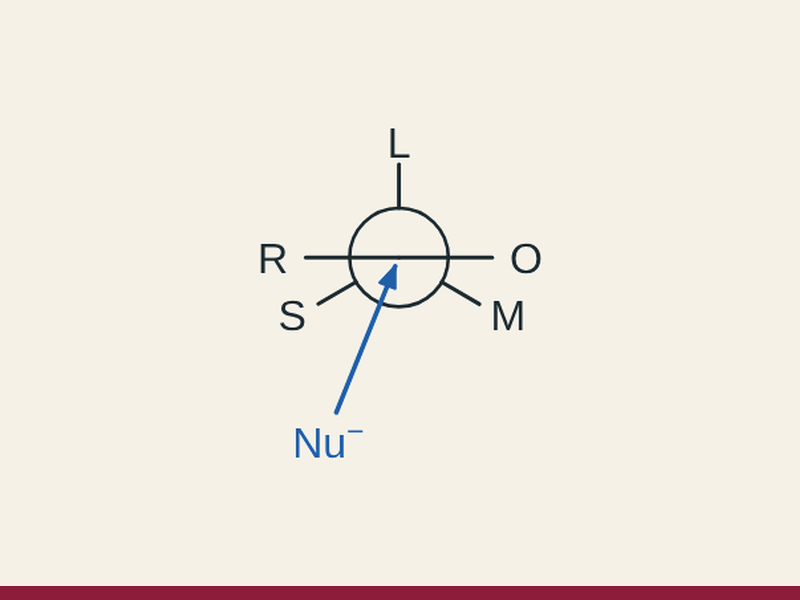
When the aldehyde or the enolate is chiral, its two faces are no longer equivalent and facial selectivity adds to syn/anti diastereoselectivity. Controlling it is the basis of the asymmetric synthesis of aldols.
In aldol, Mukaiyama and Michael reactions, the most important factors for syn or anti diastereoselectivity are the type of transition state (cyclic, open or chelated) and the configuration (E or Z) of the enolate. If the aldehyde or the enolate has a stereocentre, one more factor appears: each has two non-equivalent faces and the outcome will depend on which of them reacts.
There are four ways of exploiting it:
- the stereocentre is in the aldehyde;
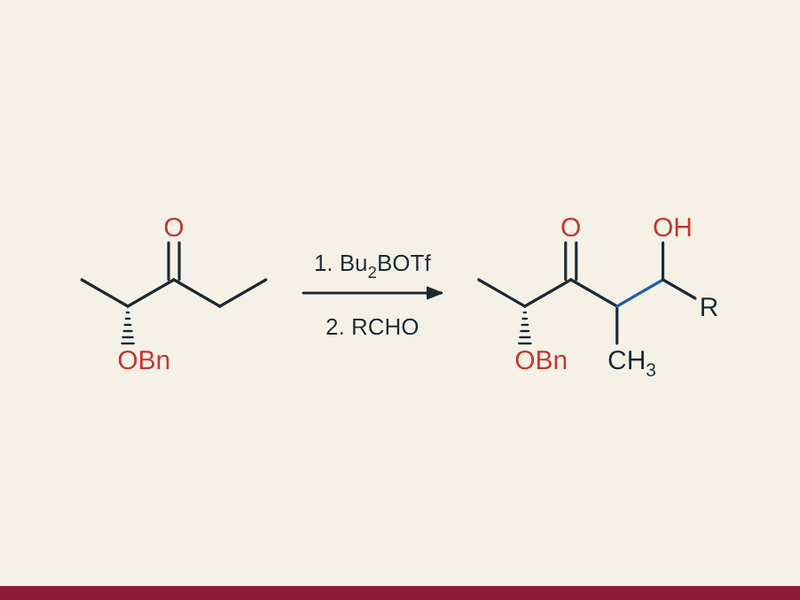
- the stereocentre is in the enolate (and, if both are chiral, their preferences add up or oppose each other);
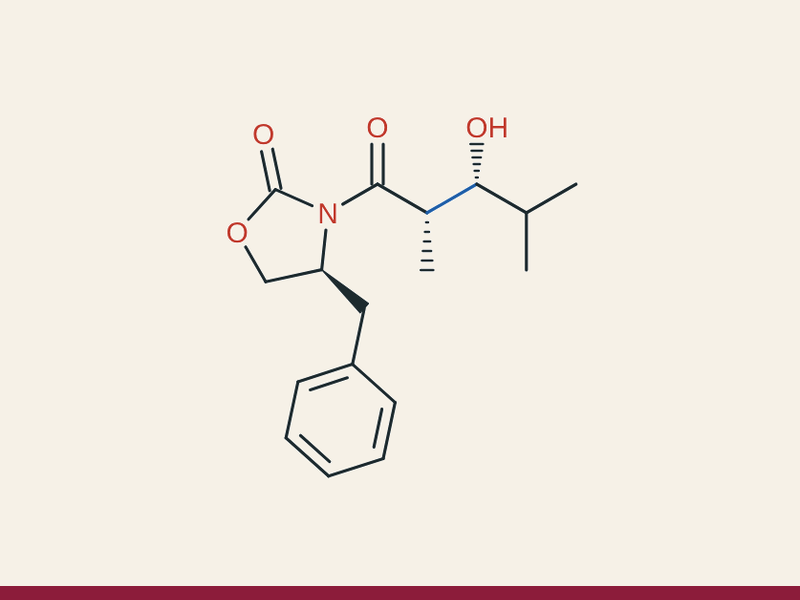
- a chiral auxiliary temporarily attached to the enolate directs the reaction and is then removed;
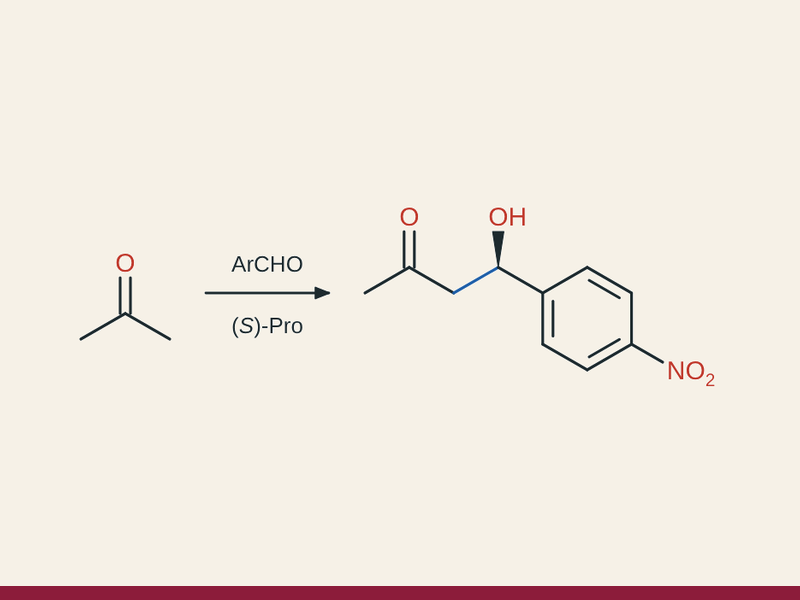
- a chiral catalyst (a Lewis acid or an organocatalyst) creates the asymmetric environment.