Alkylation of ketones and carboxylic acid derivatives
Enolates can act as nucleophiles in SN2-type reactions: overall, an α hydrogen is replaced with an alkyl group. It is one of the most important reactions of enolates because a carbon–carbon bond is formed.
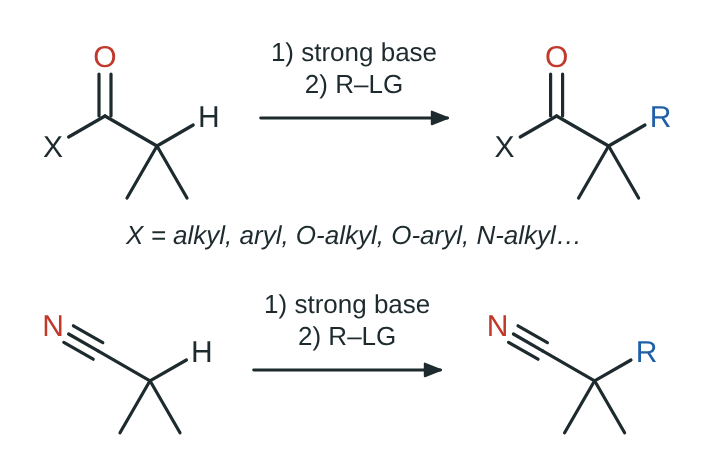
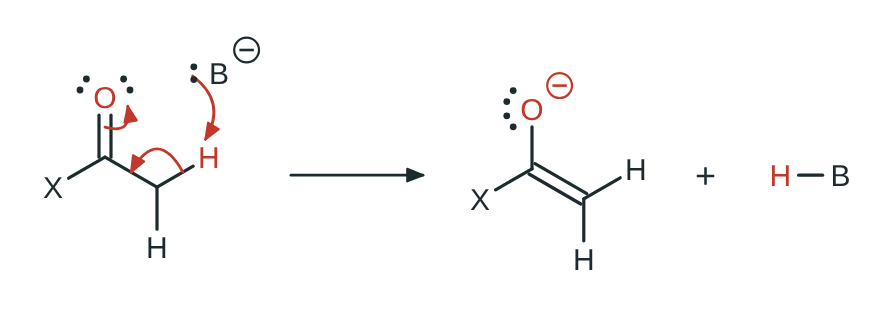
The reaction takes place in two steps. First, a base removes the α proton and forms the enolate:
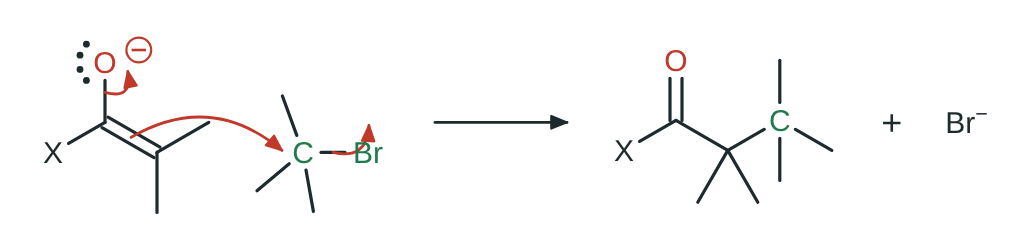
Then the nucleophilic carbon of the enolate displaces the leaving group of the alkyl halide in an SN2 substitution:
Limitations
These alkylations are subject to the typical limitations of SN2 reactions. In principle, a good leaving group must be used: chloride, bromide, iodide, tosylate, etc. Also, secondary and tertiary halides should not be used because of their poor reactivity and the possible competition with elimination reactions.
Lastly, it is important to use a strong base, such as LDA or sodium amide. A weaker base such as hydroxide or an alkoxide opens the door to undesirable side reactions: multiple alkylations, condensations, etc.
Why a strong base is needed and how the enolate forms is explained in Enolization and enolate ions. Esters, tertiary amides and nitriles are alkylated in the same way; with unsymmetrical ketones the problem of regioselectivity also arises, which is dealt with in the next section.
Metal-catalysed alkylation with alcohols
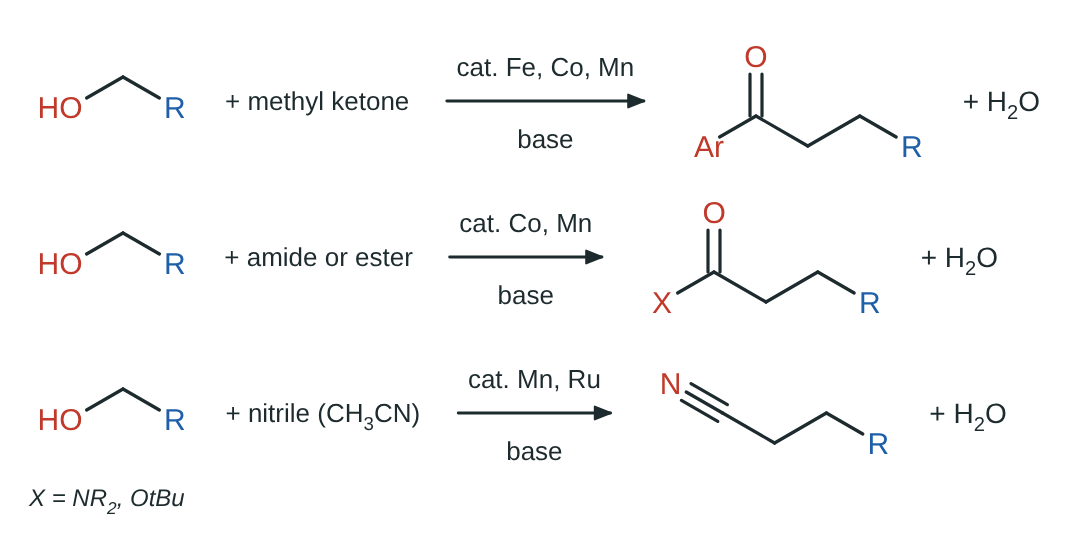
More recently, these alkylations have been carried out with a wide variety of metal catalysts, and the electrophile can even be an alcohol. The methodology is known as hydrogen borrowing and is redox-neutral: the alcohol is first dehydrogenated to form a transient carbonyl compound, which condenses with the CH-acidic compound; finally the catalyst gives the hydrogen back (autotransfer) and the α-alkylated product is obtained.
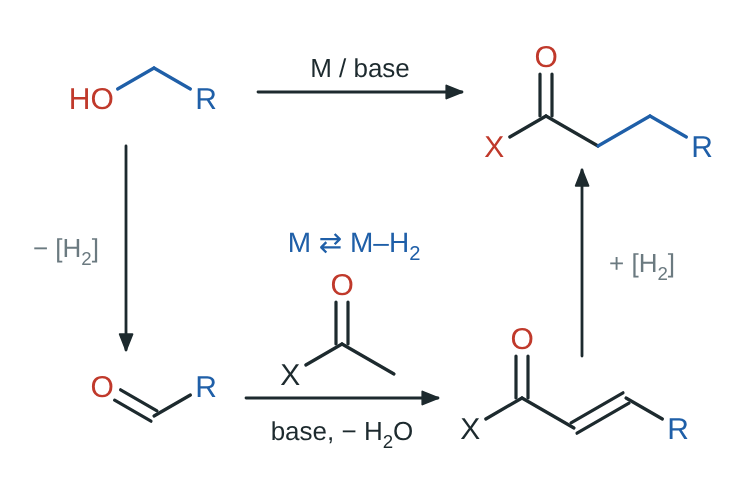
The only by-product is water, which makes the reaction very attractive from the point of view of green chemistry. Besides the classic ruthenium and iridium catalysts, “pincer” complexes of cheap, abundant metals such as manganese, iron or cobalt are now used. Some generic examples: