Cross-coupling reactions
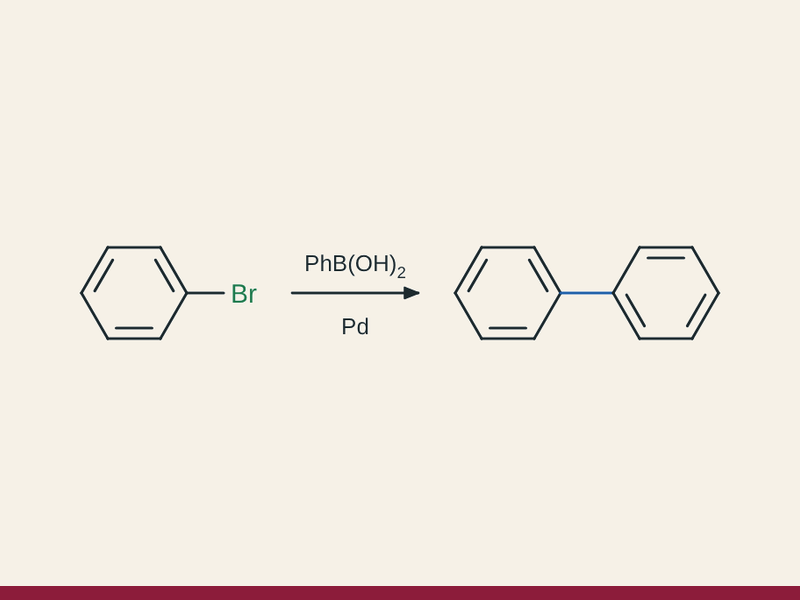
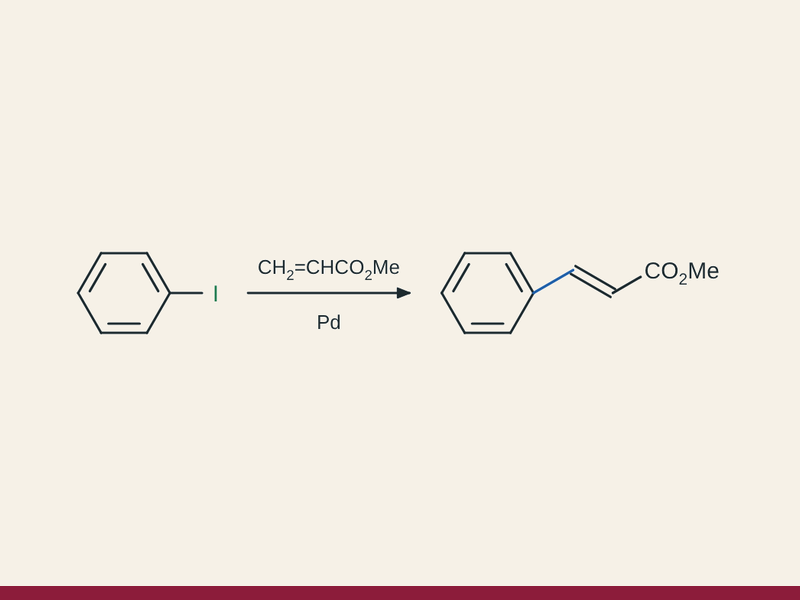
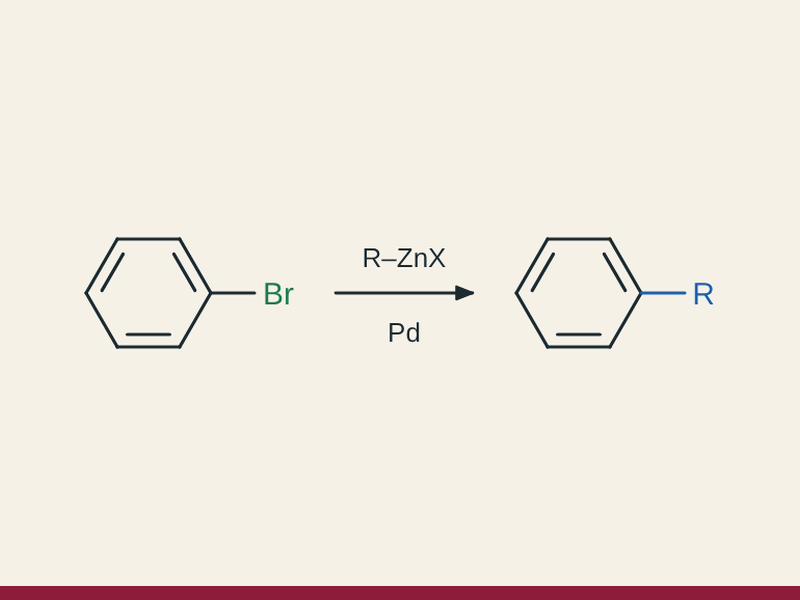
A cross-coupling joins two different organic fragments, an electrophile (a halide or a triflate) and an organometallic nucleophile, using a palladium or nickel catalyst. These reactions have changed the way molecules are built, above all the bonds between sp2 carbons, and earned Richard F. Heck, Ei-ichi Negishi and Akira Suzuki the 2010 Nobel Prize in Chemistry.

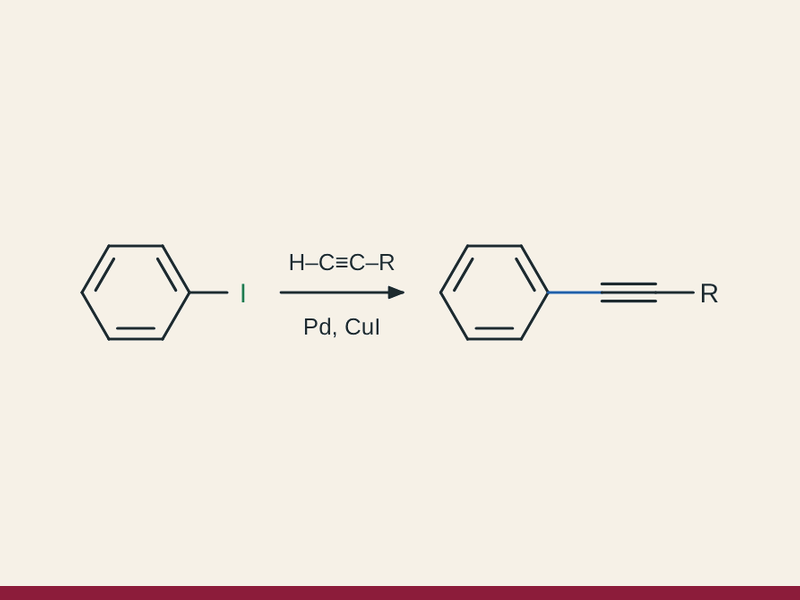
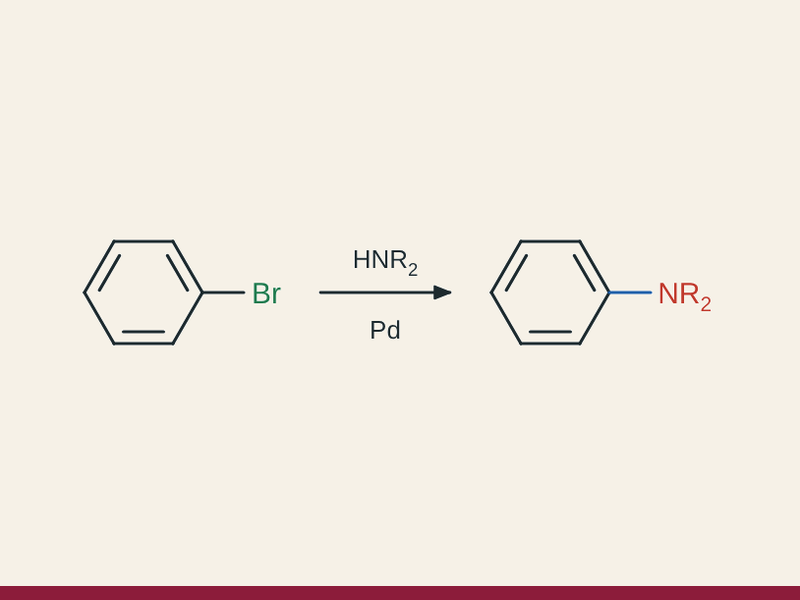
Aryl and vinyl halides do not undergo SN2 reactions nor, unless activated, nucleophilic aromatic substitution. Palladium activates them by oxidative addition, and all couplings share the catalytic cycle of oxidative addition, transmetalation and reductive elimination. They differ in the metal of the nucleophile, which determines its reactivity, its toxicity and the functional groups it tolerates:
| Reaction | Nucleophile | Features |
|---|---|---|
| Suzuki | R–B(OH)2, R–B(OR)2 | Stable, low-toxicity reagents; requires a base |
| Negishi | R–ZnX | Very reactive; tolerates esters and nitriles; air-sensitive |
| Stille | R–SnBu3 | Tolerates almost everything; tin is toxic |
| Kumada | R–MgX | Cheap; incompatible with carbonyls |
| Sonogashira | R–C≡C–H (+ Cu) | Forms arylalkynes |
| Heck | alkene | No transmetalation: insertion and β-elimination |
| Buchwald–Hartwig | HNR2, ROH | Forms C–N and C–O bonds |
Each of these reactions is studied in the following sections.